- Table View
- List View

House of Tata
by James E. Austin Ashish NandaThe case traces the evolution of the Tata group, one of the largest and highly respected Indian business houses, from its 19th century founding and early growth in diverse industries, to its response to changes in government regulation in independent India, up to its 1991 leadership transition from longtime chairman J.R.D. Tata to his successor, Ratan Tata. The case first describes how Tata group founder Jamsetji Tata and his sons entered into the steel, hotel, hydroelectric, cement, air travel, and insurance industries (among others). It then explores how the evolving role of government in business in post-Independence India impacted the Tata group. The case also outlines the acceleration in the Tata group's growth during the 1980s, following government liberalization. In addition to discussing how the group's leadership navigated through the external pressures of policy and economics, the case also examines how they managed internal pressures - reduced synergy between the diverse and legally-independent companies under Tata's umbrella, and, at times, reluctant adjustments in company culture that corresponded to Tata's generational leadership transitions. The case invites comparison between J.R.D. Tata's compassionate management style and his successor Ratan Tata's no-nonsense, analytical approach. The case closes by outlining some of the challenges facing the Tata group amidst the changing political and regulatory environment of the 1990s.
House of Tata--1995: The Next Generation (A)
by Tarun Khanna Krishna G. Palepu Danielle Melito WuThe Tata Group began the 1990s as a confederation of loosely coupled firms. This case considers the rise to prominence of the new CEO of Tata Group, Ratan Tata, and his attempts to strengthen the inter-relationships among the group companies at a time when critics claim he should be dismantling the alliance completely. Provides an opportunity to address the benefits and costs of conglomerates in emerging markets. In particular, it demonstrates the ways in which well-run conglomerates might ameliorate the costs that poorly functioning institutions impose through their effects on market efficiency.
House of Tata: Acquiring a Global Footprint
by Tarun Khanna Krishna G. Palepu Richard J. BullockChronicles the globalization of the Tata Group, one of India's largest business groups. Since 2000, many Tata Group operating companies have aggressively built international businesses, particularly through overseas acquisitions. After describing the globalization rationales and approaches of the major Tata Group companies, the case asks students to consider whether Tata Motors should pursue the acquisition of the Jaguar and Land Rover brands owned by US-based Ford Motor company.
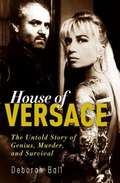
House of Versace: The Untold Story of Genius, Murder, and Survival
by Deborah BallVersace. The very name conjures up images of outrageous glamour and bold sexuality, opulence and daring. All of course true, but only half the story. Versace is also the legacy of a great creative genius from a poor, backward part of southern Italy who transformed the fashion world through his intuitive understanding of both women and how a changing culture influenced the way they wanted to dress. The first book in English about the legendary designer, House of Versaceshows how Gianni Versace, with his flamboyant sister Donatella at his side, combined his virtuosic talent and extraordinary ambition to almost single-handedly create the celebrity culture we take for granted today. Gianni Versace was at the height of his creative powers when he was murdered in Miami Beach. The story was front page news around the world and the manhunt for his killer a media obsession. His beloved sister Donatella demanded no less than a funeral befitting an assassinated head-of-state to be held in Milan's magnificent cathedral. In what was the ultimate fashion show, the world's rich and beautiful - Princess Dianna, Elton John, Carla Bruni, Naomi Campbell, Carolyn Bessette-Kennedy, Anna Wintour and others - gathered to mourn a man already considered one of fashion's great pioneers. Deborah Ball, a long-time Milan correspondent forThe Wall Street Journal, conducted hundreds of interviews with Versace family members, Gianni Versace's lovers and business rivals, models such as Naomi Campbell whom he helped shoot to international stardom and fashion industry icons, including Anna Wintour, the legendary editor ofVogue. Ball vividly recounts the behind-the scenes struggles - both creative and business - of Donatella as she stepped out of her brother's long shadow and took control of the House of Versace. The book offers the first inside look at the enormous challenges Donatella faced in living up to Gianni's genius, her struggle with a drug habit, her battles with her brother Santo and the mystery of why Gianni left control of his house to Donatella's young daughter, Allegra. House of Versaceis a compelling, highly readable tale of rise from obscurity, a painful fall and ultimate redemption as the Versace empire returned to health - for now. Bringing together fashion, celebrity, business drama, jet-set lifestyles, and a notorious crime,House of Versaceis an old-fashioned page-turner about a subject of enduring fascination.
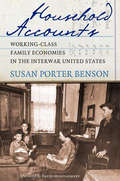
Household Accounts: Working-Class Family Economies in the Interwar United States
by David Montgomery Susan Porter BensonWith unprecedented subtlety, compassion and richness of detail, Susan Porter Benson takes readers into the budgets and the lives of working-class families in the United States between the two world wars. Focusing on families from regions across America and of differing races and ethnicities, she argues that working-class families of the time were not on the verge of entering the middle class and embracing mass culture. Rather, she contends that during the interwar period such families lived in a context of scarcity and limited resources, not plenty. Their consumption, Benson argues, revolved around hard choices about basic needs and provided therapeutic satisfactions only secondarily, if at all. Household Accounts is rich with details Benson gathered from previously untapped sources, particularly interviews with women wage earners conducted by field agents of the Women's Bureau of the Department of Labor. She provides a vivid picture of a working-class culture of family consumption: how working-class families negotiated funds; how they made qualitative decisions about what they wanted; how they determined financial strategies and individual goals; and how, in short, families made ends meet during this period. Topics usually central to the histories of consumption--he development of mass consumer culture, the hegemony of middle-class versions of consumption, and the expanded offerings of the marketplace--contributed to but did not control the lives of working-class people. Ultimately, Household Accounts seriously calls into question the usual narrative of a rising and inclusive tide of twentieth-century consumption.
Household Behaviour, Prices, and Welfare: A Collection Of Essays Including Selected Empirical Studies (Themes In Economics Ser.)
by Ranjan RayThis collection of essays covers a diverse set of topics related to household behavior and welfare. Prices play a key role in several of the essays, particularly the distributional implications of price movements, and the effects of changes in relative prices on inequality and poverty. This book shows the shift in the literature on prices from being an exclusively macro topic featuring the study of inflation and cross-country comparisons to one that is firmly rooted in micro theory-based analysis of household behavior. It also includes recent developments in the poverty measurement literature, documenting the shift from the exclusively money metric and unidimensional poverty measures to multidimensional poverty encompassing a wider view of deprivation. Largely, but not exclusively, focusing on India, the book also features global comparisons of welfare. Intra country spatial comparisons along with cross country comparisons of household behavior and welfare feature in several of the essays in this book. The book also compares the effects of selected public delivery schemes in India on the health of its children. It is a useful resource for researchers and serves as reading material for advanced graduate courses on development in India and elsewhere.
Household Deleveraging and Saving Rates: A Cross-country Analysis
by Romain BouisA report from the International Monetary Fund.
Household Demand for Consumer Goods in Developing Countries: A Comparative Perspective with Developed Countries (Routledge Studies in Development Economics)
by Maneka Jayasinghe Eliyathamby A. Selvanathan Saroja SelvanathanThis book analyses the household demand for consumer goods using a diverse database, consisting of 45 developed and developing countries. Household consumption patterns have undergone dramatic changes due to rapid economic growth, increasing household income and changing demographics. Using the most recent data available and the latest econometric techniques, the authors model demand for 12 different commodities such as food, alcohol and tobacco, housing, health, transport, health communication, and recreation and provide insightful comparisons of consumption patterns in developed and developing countries. The analysis presented in this book highlights valuable policy insights for planning government budgetary allocations and implementing policies towards an enhanced standard of living for people. The book also provides some important guidance for researchers interested in the theory and empirical application of the analysis of consumer demand.
Household Economic Behaviors
by J. A. MolinaSignificant recent changes in the structure and composition of households make the study of the economic relationships within the household of particular interest for academics and policy-makers. In this context, Household Economic Behaviors, through its focus on theoretical and empirical chapters on a range of economic behaviors within the household, provides a new and timely viewpoint. Following the Introduction and one or two surveys which give a general background, the volume includes theoretical and empirical perspectives on allocation of available time within the household, monetary and non-monetary transfers between household members, and intra-household bargaining.
Household Energy Consumption in China: 2016 Report
by Xinye Zheng Chu WeiThis book is primarily based on data from the third analysis of domestic energy consumption, and it combines the conclusive summarizes from the previous two investigations. The book sets out to extend the spatial dimension of the research to a global one and discusses future development of domestic energy consumption from a global perspective. Additionally, the book seeks to discover general rules and diversity features via comparison, domestic vs. global. Future predictions via observations and summaries of history are provided for the reader in this volume as well. The studies in this volume not only provide a basic and supportive index for academic research, but also provide readers with a concrete sketch for people to understand energy use in their day-to-day lives, and it provides policy makers with fundamental, need-to-know data.
Household Finance
by Dimitris N. ChorafasThe 'good life' for households has passed. The unwanted result which accompanied it is the sea of red ink. Confidence in the western way of life will not return until the current mess of a dysfunctional society, and its economy, is cleared out. Household Finance explains why and how this can be done.
Household Finance: A Functional Approach
by Sumit Agarwal Wenlan Qian Ruth TanHousehold finance studies is a relatively recent field, exploring a growing understanding of how households make financial decisions relating to the functions of consumption, payment, risk management, borrowing and investing; how institutions provide goods and services to satisfy these financial functions of households; and how interventions by firms, governments and other parties affect the provision of financial services. This timely book analyses existing findings about household behavior as well as findings related to policy interventions. With international case studies, this book reviews a topic of global importance and brings a crucial up-to-date survey of the field for researchers and postgraduate students.
Household Furniture Industry in 1986
by Michael E. Porter Cynthia A. Montgomery Charles W. MoormanProfiles the household furniture industry in the United States in 1986. Designed for use with Masco Corp. (A) and (B).
Household Mobility in America
by Brian Joseph GillespieThis book provides an interdisciplinary analysis of the correlations and consequences of residential relocation. Drawing on multiple nationally representative data sets, the book explores historic patterns and current trends in household mobility; individuals' mobility-related decisions; and the individual, family, and community outcomes associated with moving. These sections inform later discussions of mobility-related policy, practice, and directions for future research.
Household Waste Management: Some Insights from Behavioural Economics
by Marianna Gilli Susanna Mancinelli Francesco NicolliThis book surveys existing literature from both waste management and behavioural sciences to offer a complete overview of how economic agents relate to a central matter in the policy making agenda: that of waste prevention and recycling. Environmental behavioural economics is a growing field of research, yet investigation in this area concentrates mostly on energy savings or pollution reduction. The authors highlight the importance of the role of waste management, analysing the effect of monetary and non-monetary incentives and motivations, and explores the complex interplay between motivations, recycling, minimisation and waste policies to affect consumer behaviour. This book will be of interest to researchers and policy-makers in the fields of waste management and environmental economics.
Household Waste Recycling: Household Waste Recycling (Environmental Management Set)
by Richard WaiteHouseholds in the UK each generate around one tonne of waste per year, and the successful management and disposal of this waste is becoming an increasingly important issue. In many cases, recycling is the most sensible option, and the UK government has set a target to recycle a quarter of all household waste by the year 2000. This book gives an overview of the waste management and disposal options currently available, and provides a comprehensive and up-to-date analysis of how recycling could develop. The author – one of the UK's leading experts – looks at how much of the waste is potentially recyclable, shows the various ways in which recyclable materials can be separated and reprocessed, and assesses the existing markets for recyclable materials. He gives an in-depth account of the important subject of packaging recycling, and compares the UK's progress and performance with what is happening elsewhere in Europe. He also discusses how the performance of current recycling schemes can be measured and costed, and forecasts future developments in the industry. Dr Richard Waite is a former Specialist Advisor to the House of Commons Environment Select Committee and is currently a consultant with Coopers & Lybrand. He established one of the first commercial MRFs in the country, and has advised many local authorities, central government departments (including the European Commission) and private sector organisations on recycling issues. Originally published in 1995
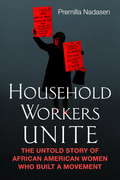
Household Workers Unite
by Premilla NadasenTelling the stories of African American domestic workers, this book resurrects a little-known history of domestic worker activism in the 1960s and 1970s, offering new perspectives on race, labor, feminism, and organizing. In this groundbreaking history of African American domestic-worker organizing, scholar and activist Premilla Nadasen shatters countless myths and misconceptions about an historically misunderstood workforce. Resurrecting a little-known history of domestic-worker activism from the 1950s to the 1970s, Nadasen shows how these women were a far cry from the stereotyped passive and powerless victims; they were innovative labor organizers who tirelessly organized on buses and streets across the United States to bring dignity and legal recognition to their occupation.Dismissed by mainstream labor as "unorganizable," African American household workers developed unique strategies for social change and formed unprecedented alliances with activists in both the women's rights and the black freedom movements. Using storytelling as a form of activism and as means of establishing a collective identity as workers, these women proudly declared, "We refuse to be your mammies, nannies, aunties, uncles, girls, handmaidens any longer."With compelling personal stories of the leaders and participants on the front lines, Household Workers Unite gives voice to the poor women of color whose dedicated struggle for higher wages, better working conditions, and respect on the job created a sustained political movement that endures today.From the Hardcover edition.

Households and Financialization in Europe: Mapping Variegated Patterns in Semi-Peripheries (RIPE Series in Global Political Economy)
by Marek MikušHouseholds and Financialization in Europe develops a processual, relational and critical transdisciplinary approach to household financialization in Europe, utilizing a range of national and local case studies. It does so by drawing on debates in Marxist, feminist and radical IPE, anthropology and other fields. The book explores the household as simultaneously a micro-level social institution specializing in social reproduction, distribution and other activities; a building bloc of larger economic and social structures; and an object of multiple systems of power/knowledge. Putting this conceptualization to use in original research, the authors identify geographically and historically situated ways in which financialization transforms households and their relationships with the wider economy and society. The book traces these transformations in case studies of variegated financialization in Eastern and Southern European (semi-) peripheries where households have faced particularly severe financial issues since the global financial crisis, such as over-indebtedness and asset devaluation. Key themes recurring throughout the book include: the key role of housing in household financialization, the co-constitutive relationship between financialization and social and spatial inequalities, specific patterns in the relations of financial actors and households in semi-peripheries, and the implications of semi-peripheral forms of real and financial accumulation for household financialization. With its transdisciplinary approach, this book will be of great interest to students and scholars of finance, financialization, household economics, international and global political economy, uneven development, economic anthropology, and economic sociology. The Introduction of this book is freely available as a downloadable Open Access PDF at http://www.taylorfrancis.com under a Creative Commons Attribution CC-BY 4.0 license.
Households, Employment, and Gender: A Social, Economic, and Demographic View
by Paula EnglandDuring the twentieth century arrangements governing love, work, and their routinization in households and employment underwent a transformation. During this period women gained employment opportunities. This reduced sex differentiation, but did not equalize the roles or power of men and women. The goal of this book is to describe the trends and patterns that remain constant amidst the change, and to provide an integrated framework for understanding them.The authors focus on a three-tier level of integration that is not available in other studies of this kind. First, they combine the topics of households and employment, showing similarities and causal links between household and employment arrangements. Second, a conceptual framework is provided that gives attention to both individuals' choices and to the structural constraints that limit available options. Finally, an integration of economic and sociological views of employment, demographic behavior, and other household behavior is examined.By using both individual and structural views, Paula England and George Farkas provide an overview of this coupling. This work is unique in that it draws from both economics and sociology and from demographers in both disciplines. Households, Employment, and Gender is an analytic synthesis for scholars and an invaluable sourcebook for classes on gender, labor, the family, social demography, economics, and economic sociology.
Housekeeping Management
by Matt A. CasadoThe second edition of Housekeeping Management is written from a management perspective of the executive housekeeper in the lodging industry. The overarching concept of the text spotlights three major areas of expertise required for the success of lodging professionals: management of resources, administration of assets, and knowledge of technical operations. The text explores the role of the housekeeping department in hotel/lodging operations, and focuses mainly on the effective communication between the housekeeping, front office, and engineering and maintenance staff. This edition will have the same focus on the management- and administration-based philosophy from the 1st Edition, but with a stronger focus on the engineering aspects of housekeeping. The book will also incorporate new concepts of energy conservation and risk management to address the latest sustainability and security trends in the industry, as well as updated information on guestroom technology.
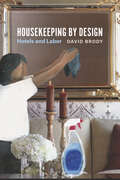
Housekeeping by Design: Hotels and Labor
by David BrodyOne of the great pleasures of staying in a hotel is spending time in a spotless, neat, and organized space that you don’t have to clean. That doesn’t, however, mean the work disappears—when we’re not looking, someone else is doing it. With Housekeeping by Design, David Brody introduces us to those people—the housekeepers whose labor keeps the rooms clean and the guests happy. Through unprecedented access to staff at several hotels, Brody shows us just how much work goes on behind the scenes—and how much management goes out of its way to make sure that labor stays hidden. We see the incredible amount of hard physical work that is involved in cleaning and preparing a room, how spaces, furniture, and other objects are designed to facilitate a smooth flow of hidden labor, and, crucially, how that design could be improved for workers and management alike if front-line staff were involved in the design process. After reading this fascinating exposé of the ways hotels work—or don’t for housekeepers—one thing is certain: checking in will never be the same again.
Housework, Consumption and Female Labour in Japan, 1600—1940: Understanding the Role of Unpaid Work in Determining Living Standards (Palgrave Studies in Economic History)
by Penelope FrancksThis book illuminates the largely neglected contribution of unpaid, primarily female household labour to economic production and living standards in Japan from the early modern period to the eve of World War Two. The difficulties involved in measuring time devoted to housework and other forms of household labour in the past have meant that most attempts to assess the process of industrialisation have failed to recognise the ways in which such labour is essential to the sustainability and welfare of the population. In this context, Japan presents a significant example of a historical case of industrialisation occurring within an economy that continued to be dominated by the institution of the household. This short study argues that this must have led to a particularly significant underestimation of Japanese living standards in the past, with implications for comparative and global analysis, and to neglect of the key role of women in the historical economy. Providing a nuanced yet concise analysis, this book will be valuable reading for scholars of economic history and feminist economics, as well as introducing important comparative angles for researchers in Japanese studies and gender studies more widely.
Housing America: Building Out of a Crisis (Independent Studies In Political Economy Ser.)
by Benjamin Powell Randall G. HolcombeHousing policy not only aff ects all Americans' quality of life, but has a direct impact on their fi nancial well being. About 70 percent of American households own their own homes, and for most, their homes represent the majority of their net worth. Renters are aff ected by housing policy. Even the small minority of Americans who are homeless are aff ected by housing policies specifi cally targeted to low-income individuals.The government's increasing involvement in housing markets, fed by popular demand that government "do something" to address real problems of mortgage defaults and loans, provides good reason to take a new look at the public sector in housing markets. Crises in prime mortgage lending may lower the cost of housing, but the poor and homeless cannot benefi t because of increases in unemployment. Even the private market is heavily regulated. Government policies dictate whether people can build new housing on their land, what type of housing they can build, the terms allowed in rental contracts, and much more.This volume considers the eff ects of government housing policies and what can be done to make them work better. It shows that many problems are the result of government rules and regulations. Even in a time of foreclosures, the market can still do a crucial a job of allocating resources, just as it does in other markets. Consequently, the appropriate policy response may well be to signifi cantly reduce, not increase, government presence in housing markets. Housing America is a courageous and comprehensive eff ort to examine housing policies in the United States and to show how such policies aff ect the housing market.
Housing Boom and Bust: Owner Occupation, Government Regulation and the Credit Crunch
by Peter KingHousing bubbles burst, creating economic misery for millions. Over the past thirty years, the culture of property ownership has become so ingrained that policy makers, bankers and households have taken for granted that housing is a good investment and forgotten about the bust. Explaining how the current crisis in housing markets has arisen, this topical and sharp analysis considers the causes of house price bubbles and the reason for the collapse in markets worldwide. Written for students, it explains the economic cycle of housing, ways in which future booms and busts can be mitigated and how the lessons of this latest housing bubble can finally be learned.
Housing Decisions
by Evelyn L. Lewis Carolyn S. TurnerLewis (emeritus, home economics, Northern Arizona U. , Flagstaff) and Turner (housing research, North Carolina Agricultural and Technical State U. , Greensboro) address numerous aspects of housing including related careers. This textbook's 7th incarnation (the last being in 2000) features color illustrations, relevant US legislation, energy-saving tips, and a glossary.