- Table View
- List View

Moses Was a Basket Case: Hilarious True Stories to Encourage and Inspire
by James A. JasperHilarious true stories to encourage and inspire A number of very funny and inspiring stories from a DJ, standup comedian, and inspirational speaker. James "J.J." Jasper is a Christian radio DJ who thoroughly enjoys telling the stories of his life.
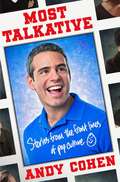
Most Talkative: Stories from the Front Lines of Pop Culture
by Andy CohenIn a witty, no-holds-barred style, Cohen tells tales of absurd network-news mishaps, hilarious encounters with the heroines of his youth, and the real stories behind the "Real Housewives."
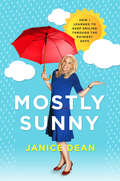
Mostly Sunny: How I Learned to Keep Smiling through the Rainiest Days
by Janice DeanA NEW YORK TIMES BESTSELLER.Sometimes you have to make your own sunshine.When Janice Dean debuted on Imus in the Morning, she was bubbly, clever, and charismatic. When Imus mocked her intelligence and looks, she gave as good as she got. She had achieved the dream she’d had since kindergarten: being a reporter on TV. So why wasn’t she happy? She had just moved to New York from Canada with no family, no friends, and no boyfriend. Her boss was a notorious jerk, and the gap between her on-air persona and real life had never been bigger. In the decade that followed, how did she turn it all around? Now she is the beloved full-time meteorologist on Fox and Friends, surrounded by wonderful people, and has a line of children’s books and a beautiful family. When she was diagnosed with multiple sclerosis, she was ready. She survived attacks, adversity, and a business controlled by ruthless men. She knows how love, counting your blessings, and having a good therapist can get you through more than you would expect.In this honest yet optimistic book, Janice reveals obstacles she’s faced that could have severely impacted any professional woman’s career, from online trolls to health issues to abusive and sexist bosses. In Mostly Sunny she talks about it all, including the fateful meeting with her firefighting husband after he lost his colleagues on 9/11 and how the pressure on women in television led her to a cosmetic procedure that could have ended her career. But no matter what storms blow her way, Janice refuses to let setbacks and challenges rain on her parade or cloud her outlook. Thanks to supportive coworkers and an upbeat attitude, she’s mastered turning countless would-be losses into victories. The funny, sweet, and wise Janice Dean you see on TV is now the real Janice Dean, and she’s on every page of her book, sharing her secrets and making your own forecast a little brighter.
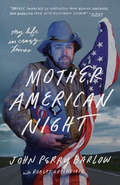
Mother American Night: My Life in Crazy Times
by John Perry Barlow Robert GreenfieldJohn Perry Barlow’s wild ride with the Grateful Dead was just part of a Zelig-like life that took him from a childhood as ranching royalty in Wyoming to membership in the Internet Hall of Fame as a digital free speech advocate.Mother American Night is the wild, funny, heartbreaking, and often unbelievable (yet completely true) story of an American icon. Born into a powerful Wyoming political family, John Perry Barlow wrote the lyrics for thirty Grateful Dead songs while also running his family’s cattle ranch. He hung out in Andy Warhol’s Factory, went on a date with the Dalai Lama’s sister, and accidentally shot Bob Weir in the face on the eve of his own wedding. As a favor to Jacqueline Kennedy Onassis, Barlow mentored a young JFK Jr. and the two then became lifelong friends. Despite being a freely self-confessed acidhead, he served as Dick Cheney’s campaign manager during Cheney’s first run for Congress. And after befriending a legendary early group of computer hackers known as the Legion of Doom, Barlow became a renowned internet guru who then cofounded the groundbreaking Electronic Frontier Foundation.His résumé only hints of the richness of a life lived on the edge. Blessed with an incredible sense of humor and a unique voice, Barlow was a born storyteller in the tradition of Mark Twain and Will Rogers. Through intimate portraits of friends and acquaintances from Bob Weir and Jerry Garcia to Timothy Leary and Steve Jobs, Mother American Night traces the generational passage by which the counterculture became the culture, and it shows why learning to accept love may be the hardest thing we ever ask of ourselves.
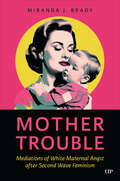
Mother Trouble: Mediations of White Maternal Angst after Second Wave Feminism
by Miranda J. BradyMother Trouble traces white maternal angst in popular culture across a span of more than fifty years, from the iconic Rosemary’s Baby to anti-vaxx mom memes and HGTV shows. The book narrows in on popular media to think about white maternal angst as a manifestation of feminism’s unrealized possibilities and continued omissions since the second wave. It interrogates intersecting systems of power which make mothers and their children the most impoverished people in the world and urges a greater appreciation in academic and popular thinking of the work that mothers do. The book calls for an analytical expansion beyond gender to better address the erasure of reproductive labour, and especially that performed by migrants and people of colour. It illustrates the continued marginalization of racialized mothers and the disproportionate amount of labour performed by all mothers in a society where their work is devalued. Ultimately, Mother Trouble reveals how the unease around white motherhood in the media has become a proxy for the troubles faced by all mothers.
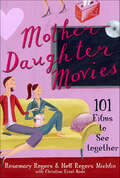
Mother-Daughter Movies: 101 Films to See Together
by Rosemary Rogers Nell Rogers Michlin Christine Ernst BodeNobody has a perfect mother. And, despite what some pushy moms would have us believe, nobody has a perfect daughter, either. It's sometimes hard to communicate with each other, but what can you do? Should you turn to Dr. Phil, psychotropic drugs, a hit man? No! Here's the solution: It's so simple, so obvious, so painless---the movies!Drawing on more than twenty years of watching movies together, real-life mother and daughter Rosemary Rogers and Nell Rogers Michlin offer plot synopses, cast reviews, and behind-the-scenes gossip for more than one hundred of their all-time-favorite movies, including invaluable ratings you won't find anywhere else, such as:*Bonding Potential: Looking for serious mother-daughter time? Try one of their top picks, like Terms of Endearment, Freaky Friday, or The Joy Luck Club.*Hunk Factor: Hannah and Her Sisters may only rate a 1 (Michael Caine and Woody Allen have other important qualities....), but School Ties, with a shirtless Matt Damon, Ben Affleck, and Brendan Fraser, gets a well-earned 10.*Hankie Factor: Because sometimes we all need a good cry.*Squirming in Your Seat Watching a Sex Scene with Your Mother/Daughter: Trust us, you'll want to know ahead of time.Wise and witty, Mother-Daughter Movies offers a fresh perspective on life's most important issues---from family conflict to surviving high school to understanding when tweezed eyebrows can totally change your life.
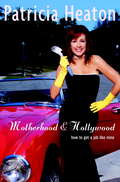
Motherhood and Hollywood
by Patricia Heaton“The really important things in life are your family and friends. And what will people say about you at your funeral—that you won an Emmy once, or that you were a good person, kind and generous? Well, as for me, I hope it's the latter. And the fact that I recently commissioned an Emmy-shaped coffin just eliminates the need for anyone to bring it up. ” Everybody knows that Patricia Heaton plays the hilarious, wise, and tempestuous married-with-kids everywoman onEverybody Loves Raymond. What they might not know is that in real life she is married, has four boys under eight years old, and is just as funny offscreen as on. Motherhood and Hollywoodis Patricia Heaton’s humorous and poignant collection of essays on life, love, marriage, child-rearing, show business, having parents, being a parent, spousal rage, surviving fame, success, and the shame of underarm flab. She is warm, witty, and refreshingly irreverent. Heaton grew up in suburban Cleveland, one of five children of devout Roman Catholic parents. Her father was a noted sportswriter forThe Plain Dealer; her mother died suddenly and unexpectedly when Heaton was twelve. Love, fast food, and an unflagging sense of humor held the clan together and propelled Patricia on a showbiz career that began with hilariously nightmarish struggles in New York, eventually leading to a triumphant move to Los Angeles. InMotherhood and Hollywood, Patricia Heaton pours out her heart and minces no words. She’s taking all prisoners for cookies and a glass of Jack Daniel’s and diet ginger ale. Laughter ensues.
Motherhood: The Second Oldest Profession
by Erma BombeckMotherhood is the second oldest profession in the world. It never questions age, height, religious preference, health, political affiliation, citizenship, morality, ethnic background, marital status, economic level, convenience, or previous experience. It's the biggest on-the-job training program in existence today.
Mothering Performance: Maternal Action (Routledge Advances in Theatre & Performance Studies)
by Lena Šimić Emily Underwood-LeeMothering Performance is a combination of scholarly essays and creative responses which focus on maternal performance and its applications from a variety of interdisciplinary perspectives. This collection extends the concept and action of ‘performance’ and connects it to the idea of ‘mothering’ as activity. Mothering, as a form of doing, is a site of never-ending political and personal production; it is situated in a specific place, and it is undertaken by specific bodies, marked by experience and context. The authors explore the potential of a maternal sensibility to move us towards maternal action that is explicitly political, ethical, and in relation to our others. Presented in three sections, Exchange, Practice, and Solidarity, the book includes international contributions from scholars and artists covering topics including ecology, migration, race, class, history, incarceration, mental health, domestic violence, intergenerational exchange, childcare, and peacebuilding. The collection gathers diverse maternal performance practices and methodologies which address aesthetics, dramaturgy, activism, pregnancy, everyday mothering, and menopause. The book is a great read for artists, maternal health and care professionals, and scholars. Researchers with an interest in feminist performance and motherhood, within the disciplines of performance studies, maternal studies, and women’s studies, and all those who wish to gain a deeper understanding of maternal experience, will find much of interest.
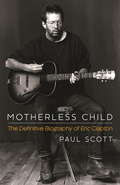
Motherless Child: The Definitive Biography of Eric Clapton
by Paul ScottFrom the Yardbirds to Cream, Blind Faith to Derek and the Dominos, and a hugely-successful solo career, Eric Clapton's fifty years in the music business can look like an uninterrupted rise to become one of the greatest guitar players who ever lived. But his story is as complicated as it is fascinating.Clapton's god-like skill with a guitar was matched by an almost equal talent for self-destruction. He has never shied away from telling the truth about his battles with drink and drugs - or the sometimes catastrophic impact they had on the other people in his life, including his first wife Pattie Boyd. And without those deep personal lows we may never have had the musical highs that won him millions of fans. His story is also one of a long but successful road to sobriety, redemption and happiness.Motherless Child chronicles Clapton's remarkable journey: the music, the women, the drugs, the cars, the guitars, the heartbreak and the triumphs are all here. The book includes interviews with some people close to Clapton who have never spoken on the record before. It explores his musical legacy as one of the most influential musicians of his generation, and as the keeper of the flame for the blues.
Motherless Child: The Definitive Biography of Eric Clapton
by Paul ScottTimed for release around Clapton's 70th birthday, MOTHERLESS CHILD will be the ultimate celebration and definitive biography of one of the most influential musicians alive today. From the 1960s graffiti proclaiming 'Clapton is God', to his seminal work in supergroup Cream and his phenomenally successful solo career, Eric Clapton has achieved the status of bona fide living legend and enduring icon. Now in his sixth decade in the music business, he occupies an exulted position at the pinnacle of the rock world thanks to songs like Layla, Wonderful Tonight and Tears In Heaven, and for many is considered the greatest guitarist who ever lived. This book will chart his rise to stardom in the 60s and his unparalleled success since walking out of the Yardbirds as a 20-year-old to follow his chosen path of the blues with John Mayall's Bluesbreakers and later with Jack Bruce and Ginger Baker in supergroup Cream, as well as his successful solo career. However, his success has come at a price. Once a happy well-adjusted boy, the young Clapton was devastated by the realisation at the age of nine that the woman he thought was his sister was in fact his mother, and that the couple he thought were his parents were his maternal grandparents. His treatment by his mother was also to shape his future turbulent relationships with the women in his life, including his failed first marriage to model Pattie Boyd, who was married to Clapton's close friend George Harrison when he fell for her. Motherless Child also chronicles his battles with the demons of drugs and alcohol, his successful journey to sobriety, and examines his legacy as one of the most influential musicans of his generation. This is essential reading for any Clapton fan.
Mothers of Invention: Film, Media, and Caregiving Labor (Contemporary Approaches to Film and Media Series)
by Rashna Wadia Richards Claire Perkins Missy Molloy Sara Saljoughi Jules Arita Koostachin Kristi McKim Elinor Cleghorn Susan Berridge Maria Cabrera Corinn Columpar Tamsyn Dent Kristy Guevara-Flanagan Alice Haylett Bryan Irene Lusztig So Mayer Tessa Ashlin Nunn Elissa RashkinMothers of Invention: Film, Media, and Caregiving Laborconstructs a feminist genealogy that foregrounds the relationship between acts of production on the one hand and reproduction on the other. In this interdisciplinary collection, editors So Mayer and Corinn Columpar bring together film and media studies with parenting studies to stake out a field, or at least a conversation, that is thick with historical and theoretical dimension and invested in cultural and methodological plurality. In four sections and sixteen contributions, the manuscript reflects on how caregiving shapes the work of filmmakers, how parenting is portrayed on screen, and how media contributes to radical new forms of care and expansive definitions of mothering. Featuring an exciting array of approaches—including textual analysis, industry studies, ethnographic research, production histories, and personal reflection—Mothers of Invention is a multifaceted collection of feminist work that draws on the methods of both the humanities and the social sciences, as well as the insights borne of both scholarship and lived experience. Grounding this inquiry is analysis of a broad range of texts with global reach—from the films Bashu, The Little Stranger (Bahram Beyzai, 1989), Prevenge (Alice Lowe, 2016), and A Deal with the Universe (Jason Barker, 2018) to the television series Top of the Lake (2013–2017) and Jane the Virgin (2014–2019), among others—as well as discussion of the creative practices, be they related to production, pedagogy, curation, or critique, employed by a wide variety of film and media artists and/or scholars. Mothers of Invention demonstrates how the discourse of parenting and caregiving allows the discipline to expand its discursive frameworks to address, and redress, current theoretical, political, and social debates about the interlinked futures of work and the world. This collection belongs on the bookshelves of students and scholars of cinema and media studies, feminist and queer media studies, labor studies, filmmaking and production, and cultural studies.
Mothers, Comrades, and Outcasts in East German Women's Films (New Directions in National Cinemas)
by Jennifer L. CreechMothers, Comrades, and Outcasts in East German Women's Film merges feminist film theory and cultural history in an investigation of "women's films" that span the last two decades of the former East Germany. Jennifer L. Creech explores the ways in which these films functioned as an alternative public sphere where official ideologies of socialist progress and utopian collectivism could be resisted. Emerging after the infamous cultural freeze of 1965, these women's films reveal a shift from overt political critique to a covert politics located in the intimate, problem-rich experiences of everyday life under socialism. Through an analysis of films that focus on what were perceived as "women's concerns"—marital problems, motherhood, emancipation, and residual patriarchy—Creech argues that the female protagonist served as a crystallization of socialist contradictions. By framing their politics in terms of women's concerns, these films used women's desire and agency to contest the more general problems of social alienation and collectivism, and to re-imagine the possibilities of self-fulfillment under socialism.
Motion Design Toolkit: Principles, Practice, and Techniques
by Austin Shaw John ColetteThis book offers a comprehensive overview of techniques, processes, and professional practices in the area of Motion Design, from fundamental building blocks of organizing time and space in production to managing workflow, budgets, and client relationships. The authors provide insight into the production process from concept through execution in areas as diverse as social media to large-scale projection mapping for events and festivals. Readers will learn through real-world examples, case studies, and interviews how to effectively use their skills in various areas of Motion Design. Industry professionals provide unique perspectives on different areas of Motion Design while showcasing their outstanding and inspiring work throughout. This is a valuable resource to students who aspire to work in a broad range of visual communication disciplines and expand their practice of Motion Design.
Motion Picture Paradise: A History of Florida's Film and Television Industry
by David MortonHighlighting Florida’s essential, often overlooked role in shaping American film and television Motion Picture Paradise is a sweeping story of filmmaking in Florida, featuring the activities of studios and filmmakers across the peninsula by looking at the many iconic films and television shows shot in the state. In the early years of the American film industry, Florida was a favorite location for pioneer movie makers, and David Morton chronicles the state’s importance to producers throughout the next 125 years.Often overshadowed by the well-known entertainment industries of Hollywood and New York, Florida has over time had several major film production centers. Morton follows the rise and fall of filmmaking destinations across the state, including Jacksonville, St. Augustine, Tampa Bay, Orlando, and Miami, as well as pioneering underwater and location-based films shot at Florida’s unique natural springs. He argues that conflicting policies set by Florida politicians have, at various times, enticed or pushed away movie and television companies, a pattern that has hampered serious investment.Using a wealth of source materials, Morton offers a comprehensive history that demonstrates how films and television shows made in Florida have influenced the state’s sense of identity, drawing attention to Florida’s underacknowledged role as the “third coast” in American film history. Motion Picture Paradise adds new insights into the state’s dramatic social and economic transformations during the twentieth century.
Motion Picture Series and Sequels: A Reference Guide (Routledge Library Editions: Cinema)
by Bernard A. DrewIn 1989 alone, for example, there were some forty-five major motion pictures which were sequels or part of a series. The film series phenomenon crosses all genres and has been around since the silent film era. This reference guide, in alphabetical order, lists some 906 English Language motion pictures, from 1899 to 1990, when the book was initially published. A brief plot description is given for each series entry, followed by the individual film titles with corresponding years, directors and performers. Animated pictures, documentaries and concert films are not included but movies released direct to video are.
Motion Picture and Video Lighting
by Blain BrownMotion Picture and Video Lighting, Second Edition, is your indispensable guide to film and video lighting. Written by the author of the industry bible Cinematography, this book explores technical, aesthetic, and practical aspects of lighting for film and video. It will show you not only how to light, but why. Written by a professional in the field, this comprehensive book explores light and color theory; equipment; and techniques to make every scene look its best.Now in full color, Motion Picture and Video Lighting is heavily illustrated with photos and diagrams throughout.This new edition also includes the ultimate 'behind the scenes' DVD that takes you directly on a professional shoot and demonstrates technical procedures and equipment. In addition, 20 video clips include: lighting demonstrations, technical tests, fundamentals of lighting demos, and short scenes illustrating different styles of lighting.
Motion Picture and Video Lighting
by Blain BrownThis fully revised and updated fourth edition of Motion Picture and Video Lighting explores the technical, aesthetic, and practical aspects of lighting for film and video. It covers not only how to light, but also why. The process of lighting is emphasized, as well as practical techniques and visual storytelling with light. Written by experienced filmmaker, film school teacher, and author Blain Brown, this book emphasizes how the image, the mood, and the visual impact of a film are, to a great extent, determined by the skill and sensitivity of the director of photography in using lighting. It provides an indispensable, highly illustrated, and comprehensive guide to making every scene look its best. This new edition has been expanded to provide further guidance at the introductory level for students, those just starting their careers, and people already working in the business who want to move up. Topics include: Lighting Sources LEDs The Lighting Process Lighting Basics Controlling Light Lighting Scenes A Lighting Playbook Storytelling With Light Electricity and Distribution Gripology Set Operations Technical Issues A robust accompanying companion website also includes video tutorials and other resources for students and professionals alike, including lighting demonstrations, basic methods of lighting, using diffusion, color control, and other topics.
Motion Picture and Video Lighting, Second Edition
by Blain BrownMotion Picture and Video Lighting, Second Edition, is the indispensable guide to film and video lighting. This book explores technical, aesthetic, and practical aspects of lighting for film and video, showing you not only how to light, but why. This comprehensive book explores light and color theory, equipment, and techniques to make every scene look its best.
Motion Picture and Video Lighting: For Cinematographers, Gaffers And Lighting Technicians
by Blain BrownLighting is at the heart of filmmaking. The image, the mood, and the visual impact of a film are, to a great extent, determined by the skill and sensitivity of the director of photography in using lighting. Motion Picture and Video Lighting explores technical, aesthetic, and practical aspects of lighting for film and video. It covers not only how to light, but also why. This revised edition of Motion Picture and Video Lighting is the indispensable guide to film and video lighting. Written by an experienced professional, this comprehensive book explores light and color theory, equipment, and techniques to make every scene look its best, and is heavily illustrated throughout. Three new chapters discuss best practices of using light to benefit your film, and an extensive appendix includes discussion on additional tips and tricks. In addition, a robust companion website includes up-to-date video tutorials and other resources for students and professionals alike. Three new chapters: Scene Lighting Lighting as Storytelling Controlling Light Topics include: Lighting sources The lighting process Lighting basics LED, tungsten, Kino-Flo, HMI, and plasma lights Methods of controlling light Planning your lighting The basic methods: a lighting playbook Visual storytelling with light Understanding and controlling color Terminology Electricity and distribution Gripology Set operations The team: DP, gaffer, grips, lighting technicians Technical issues Lighting for greenscreen/bluescreen Typical equipment orders for large and small jobs Lighting for high speed and macro photography Lighting plans for small, medium, and large films
Motion: The Cinema of Stasis (Film and Culture Series)
by Justin RemesConducting the first comprehensive study of films that do not move, Justin Remes challenges the primacy of motion in cinema and tests the theoretical limits of film aesthetics and representation. Reading experimental films such as Andy Warhol's Empire (1964), the Fluxus work Disappearing Music for Face (1965), Michael Snow's So Is This (1982), and Derek Jarman's Blue (1993), he shows how motionless films defiantly showcase the static while collapsing the boundaries between cinema, photography, painting, and literature. Analyzing four categories of static film--furniture films, designed to be viewed partially or distractedly; protracted films, which use extremely slow motion to impress stasis; textual films, which foreground the static display of letters and written words; and monochrome films, which display a field of monochrome color as their image--Remes maps the interrelations between movement, stillness, and duration and their complication of cinema's conventional function and effects. Arguing all films unfold in time, he suggests duration is more fundamental to cinema than motion, initiating fresh inquiries into film's manipulation of temporality, from rigidly structured works to those with more ambiguous and open-ended frameworks. Remes's discussion integrates the writings of Roland Barthes, Gilles Deleuze, Tom Gunning, Rudolf Arnheim, Raymond Bellour, and Noel Carroll and will appeal to students of film theory, experimental cinema, intermedia studies, and aesthetics.
Motor City Movie Culture, 1916-1925
by Richard AbelMotor City Movie Culture, 1916–1925 is a broad textured look at Hollywood coming of age in a city with a burgeoning population and complex demographics. Richard Abel investigates the role of local Detroit organizations in producing, distributing, exhibiting, and publicizing films in an effort to make moviegoing part of everyday life. Tapping a wealth of primary source material—from newspapers, spatiotemporal maps, and city directories to rare trade journals, theater programs, and local newsreels—Abel shows how entrepreneurs worked to lure moviegoers from Detroit's diverse ethnic neighborhoods into the theaters. Covering topics such as distribution, programming practices, nonfiction film, and movie coverage in local newspapers, with entr'actes that dive deeper into the roles of key individuals and organizations, this book examines how efforts in regional metropolitan cities like Detroit worked alongside California studios and New York head offices to bolster a mass culture of moviegoing in the United States.
Motor City Movie Culture, 1916–1925
by Richard AbelA study of how the film industry came to flourish in Detroit in the early years as locals were lured into the new picture theaters. Motor City Movie Culture, 1916–1925 is a broad textured look at Hollywood coming of age in a city with a burgeoning population and complex demographics. Richard Abel investigates the role of local Detroit organizations in producing, distributing, exhibiting, and publicizing films in an effort to make moviegoing part of everyday life. Tapping a wealth of primary source material—from newspapers, spatiotemporal maps, and city directories to rare trade journals, theater programs, and local newsreels—Abel shows how entrepreneurs worked to lure moviegoers from Detroit&’s diverse ethnic neighborhoods into the theaters. Covering topics such as distribution, programming practices, nonfiction film, and movie coverage in local newspapers, with entr&’actes that dive deeper into the roles of key individuals and organizations, this book examines how efforts in regional metropolitan cities like Detroit worked alongside California studios and New York head offices to bolster a mass culture of moviegoing in the United States.
Motor City Movie Culture, 1916–1925
by Richard AbelA study of how the film industry came to flourish in Detroit in the early years as locals were lured into the new picture theaters. Motor City Movie Culture, 1916–1925 is a broad textured look at Hollywood coming of age in a city with a burgeoning population and complex demographics. Richard Abel investigates the role of local Detroit organizations in producing, distributing, exhibiting, and publicizing films in an effort to make moviegoing part of everyday life. Tapping a wealth of primary source material—from newspapers, spatiotemporal maps, and city directories to rare trade journals, theater programs, and local newsreels—Abel shows how entrepreneurs worked to lure moviegoers from Detroit&’s diverse ethnic neighborhoods into the theaters. Covering topics such as distribution, programming practices, nonfiction film, and movie coverage in local newspapers, with entr&’actes that dive deeper into the roles of key individuals and organizations, this book examines how efforts in regional metropolitan cities like Detroit worked alongside California studios and New York head offices to bolster a mass culture of moviegoing in the United States.
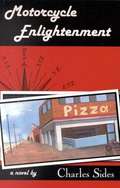
Motorcycle Enlightenment
by Charles SidesALAN PIERCE-in his forties, divorced, clueless, a bit neurotic, without a job-can't find his way across the street without getting lost, it seems. The only thing Pierce knows for certain is where to find really good pizza on the Ocean City, New Jersey, boardwalk-and that's as far as he gets in his "cross-country motorcycle odyssey" in search of enlightenment. He ditches the idea of traveling to the West Coast (he can't find it), sells his motorcycle (he gets leg cramps), and digs in where he finds himself. As he searches for inner peace and self-understanding, his life becomes a paradoxical study of indirection: he goes by not going, he bikes by selling his bike. Following his "doughnut" wisdom, Alan calms down, relaxes his mind, and learns to meditate, all the while observing himself with the bemused and sometimes startled fascination of an anthropologist. Quirky, clever, and somehow actually instructive, Motorcycle Enlightenment is a stand-up comic's take on adventure along the spiritual path.