- Table View
- List View
Dodge County, Incorporated: Big Ag and the Undoing of Rural America
by Sonja Trom EayrsIn 2014 Sonja Trom Eayrs&’s parents filed the first of three lawsuits against Dodge County officials and their neighbors, one of the few avenues available to them to challenge installation of a corporate factory farm near their intergenerational family farm in Dodge County, Minnesota. For years they&’d witnessed the now widely known devastation wrought by industrial hog operations—inhumane treatment of animals and people, pollution, the threat of cancer clusters, and more. They&’d had enough. They also deeply understood an effect of Big Ag rarely discussed in mainstream media—the hollowing-out of their lifelong farming community and economy in service of the corporate bottom line. In a compelling firsthand account of one family&’s efforts to stand against corporate takeover, Dodge County, Incorporated tells a story of corporate malfeasance. Starting with the late 1800s, when her Norwegian great-grandfather immigrated to Dodge County, Trom Eayrs tracks the changes to farming over the years that ultimately gave rise to the disembodied corporate control of today&’s food system. Trom Eayrs argues that far from being an essential or inextricable part of American life, corporatism can and should be fought and curbed, not only for the sake of land, labor, and water but for democracy itself.
Dodge WC54 Ambulance
by Fabien RaudIn 1940, the U.S. Army began to standardize the production of vehicles it required to fight a modern war—including support and medical vehicles. The first deliveries of the ¾-ton Dodge WC54 ambulance arrived in 1942. Built by Chrysler, and utilizing the same chassis and engine as the entire Dodge WC series, the WC54 ambulance has specific features to use for the rescue and transport of injured soldiers. In all, more than 26,000 Dodge WC54 vehicles would be built during the war. Used by the U.S. military and its allies, it remained in service after the war in a number of countries including France. The Dodge WC54 ambulance is an iconic vehicle from this period, and remains highly sought after by collectors—it is still possible to find ambulances in varying states of repair available for sale. Based upon his own painstaking restoration of a WC54, the author presents in detail every element of this vehicle—chassis, cabin, electrical circuitry, accessories, and markings. He explains the adaptations made to the body, mechanics, and markings of the ambulance during the war, and shows the differences between the Dodge WC54s used by the U.S. military and those of the French army. Abundantly illustrated with more than 450 photos, this book is a perfect reference for all enthusiasts of military vehicles.
Dodger
by Terry PratchettBeloved and bestselling author Sir Terry Pratchett's Dodger, a Printz Honor Book, combines high comedy with deep wisdom in a tale of one remarkable boy's rise in a fantasy-infused Victorian London. Seventeen-year-old Dodger is content as a sewer scavenger. But he enters a new world when he rescues a young girl from a beating, and her fate impacts some of the most powerful people in England. From Dodger's encounter with the mad barber Sweeney Todd, to his meetings with the great writer Charles Dickens and the calculating politician Benjamin Disraeli, history and fantasy intertwine in a breathtaking account of adventure and mystery.
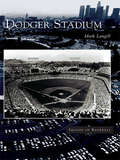
Dodger Stadium (Images of Baseball)
by Mark LangillSince 1962, the inspiring architecture and sweeping vistas of Dodger Stadium have inspired millions of Los Angeles Dodgers baseball fans. What team president Walter OMalley envisioned nearly half a century ago endures as one of professional baseballs most striking pieces of architecture, standing in the shadow of the dramatic San Gabriel Mountains. Dodger Stadium is also one of only two such parks built during the 20th century constructed entirely with private funds. Most people think of the stadium as a world-class baseball park, and Dodger Stadium has certainly earned such a reputation, hosting eight World Series, an All-Star contest, and hundreds of action-filled games through the years, during which the Dodgers won eight National League championships and four World Series. But the stadium has been much more than a sporting ground, hosting Olympic ceremonies and events, a papal visit from John Paul II in 1987, and world-renowned musical events, ranging from Elton John to KISS to The Three Tenors. Other events have included ski-jumping competitions, boxing, and a Harlem Globetrotters basketball exhibition. For four years in the 1960s the stadium was also used by the Los Angeles Angels baseball team.
Dodgerland: Decadent Los Angeles and the 1977–78 Dodgers
by Michael FallonThe 1977–78 Los Angeles Dodgers came close. Their tough lineup of young and ambitious players squared off with the New York Yankees in consecutive World Series. The Dodgers’ run was a long time in the making after years of struggle and featured many homegrown players who went on to noteworthy or Hall of Fame careers, including Don Sutton, Steve Garvey, Davey Lopes, and Steve Yeager. Dodgerland is the story of those memorable teams as Chavez Ravine began to change, baseball was about to enter a new era, and American culture experienced a shift to the “me” era. Part journalism, part social history, and part straight sportswriting, Dodgerland is told through the lives of four men, each representing different aspects of this L.A. story. Tom Lasorda, the vocal manager of the Dodgers, gives an up-close view of the team’s struggles and triumphs; Tom Fallon, a suburban small-business owner, witnesses the Dodgers’ season and the changes to California's landscape—physical, social, political, and economic; Tom Wolfe, a chronicler of California’s ever-changing culture, views the events of 1977–78 from his Manhattan writer’s loft; and Tom Bradley, Los Angeles’s mayor and the region’s most dominant political figure of the time, gives a glimpse of the wider political, demographic, and economic forces that affected the state at the time. The boys in blue drew baseball’s focus in those two seasons, but the intertwining narratives tell a larger story about California, late 1970s America, and great promise unrealized.
Dodgers in the Hall of Fame (Images of Baseball)
by David Hickey Kerry Keene Raymond P. SinibaldiAmong the most successful franchises in the long and glorious history of baseball, the Dodgers have captured 25 pennants and have been crowned world champions seven times; only five teams in history have claimed more World Series titles. The Dodgers are baseball's most transformative franchise. In 1947, Jackie Robinson changed the face of baseball and America. They built Dodgertown in 1948; became the first major-league team to own a plane; and spurred the move west in 1958, where Sandy Koufax redefined pitching dominance. Herein lies the story of the men who have worn Dodger blue on their way to becoming baseball immortals, forever enshrined in Cooperstown's Baseball Hall of Fame.
Dodgers vs. Yankees: The Long-Standing Rivalry Between Two of Baseball's Greatest Teams
by Michael SchiavoneA History of the Epic Rivalry between Two of Baseball's Powerhouses that Has Spanned Over Eighty Years—from Ebbets Field to Dodger Stadium, from Babe Ruth to Reggie Jackson The Los Angeles Dodgers and New York Yankees are two of the most storied and popular teams in not only baseball, but all of sports. Their rivalry began in New York and continued with the Dodgers leaving Brooklyn and moving to sunny California. The two teams have even met in the World Series a record eleven times! For a long time, the Dodgers-Yankees rivalry was the marquee match-up in baseball. For as good as the Dodgers were, the Yankees were almost always better. But why were the Yankees so much better than the Dodgers? Were the Dodgers &“chokers&” when it mattered most? Or was it simply the case that the baseball gods favored the team that would be later known to its detractors as the &“Evil Empire&” over the boys in blue? From Don Larsen&’s perfect game in the 1956 World Series, Jackie Robinson&’s famous steal of home in the 1955 Series, or Reggie Jackson&’s three-home-run game in the 1977 Series, Dodgers vs. Yankees provides a history of this rivalry—from their first World Series match-up in 1941 until the present day. Every game between the two teams, including inter-league play, is covered as author Michael Schiavone attempts to answer why the Yankees have reigned supreme over the Dodgers. Whether you&’re a fan of the Yankees or Dodgers—both on the East and West Coast—Dodgers vs. Yankees offers the most complete overview and analysis of these team&’s timeless rivalry.
Dodging Bullets: Changing U. S. Corporate Capital Structure in the 1980s and 1990s
by Robert N. Mccauley Judith S. Ruud Frank IaconoThe late 1980s saw a huge wave of corporate leveraging. The U. S. financial landscape was dominated by a series of high-stakes leveraged buyouts as firms replaced their equity with new fixed debt obligations. Cash-financed acquisitions and defensive share repurchases also decapitalized corporations. This trend culminated in the sensational debt-financed bidding for RJR-Nabisco, the largest leveraged buyout of all time, before dramatically reversing itself in the early 1990s with a rapid return to equity. This entertaining summary of the broad reshaping of U. S. corporate finance in the last decade and a half looks at three major issues: why corporations leveraged up in the first place, why and how the leverage wave came to an end, and what policy lessons are to be drawn. Using the Minsky-Kindleberger model as a framework, the authors interpret the rise and fall of leveraging as a financial market mania. In the course of chronicling the return to equity in the 1990s, they address a number of important corporate finance questions: How important was the return to equity in relieving corporations' debt burdens? How did the return to equity affect the ability of young high-tech firms to finance themselves without selling out to foreign firms?
Dodging and Burning: A Mystery
by John CopenhaverIn a small Virginia town still reeling from World War II, a photograph of a beautiful murdered woman propels three young people into the middle of a far-reaching mystery. A lurid crime scene photo of a beautiful woman arrives on mystery writer Bunny Prescott's doorstep with no return address—and it's not the first time she's seen it. The reemergence of the photo, taken fifty-five years earlier, sets her on a journey to reconstruct the vicious summer that changed her life. In the summer of 1945, Ceola Bliss is a lonely twelve-year-old tomboy, mourning the loss of her brother, Robbie, who was declared missing in the Pacific. She tries to piece together his life by rereading his favorite pulp detective story “A Date with Death” and spending time with his best friend, Jay Greenwood, in Royal Oak, VA. One unforgettable August day, Jay leads Ceola and Bunny to a stretch of woods where he found a dead woman, but when they arrive, the body is gone. They soon discover a local woman named Lily Vellum is missing and begin to piece together the threads of her murder, starting with the photograph Jay took of her abandoned body. As Ceola gets swept up playing girl detective, Bunny becomes increasingly skeptical of Jay, and begins her own investigation into the connection between Jay and Lily. She discovers a series of clues that place doubt on Jay’s story about the photograph. She journeys to Washington, D.C., where she is forced to confront the brutal truth about her dear friend—a discovery that triggers a series of events that will bring tragedy to Jay and decades of estrangement between her and Ceola.
Does America Need a Foreign Policy? Toward a New Diplomacy for the 21st Century
by Henry KissingerIn this timely, thoughtful, and important book, at once far-seeing and brilliantly readable, America's most famous diplomatist explains why we urgently need a new and coherent foreign policy and what our foreign policy goals should be in the post-Cold War world of globalization. Dr. Henry Kissinger covers the wide range of problems facing the United States at the beginning of a new millennium and a new presidency, with particular attention to such hot spots as Vladimir Putin's Russia, the new China, the globalized economy, and the demand for humanitarian intervention. He challenges Americans to understand that our foreign policy must be built upon America's permanent national interests, defining what these are, or should be, in the year 2001 and for the foreseeable future. Here Dr. Kissinger shares with readers his insights into the foreign policy problems and opportunities that confront the United States today, including the challenge to conventional diplomacy posed by globalization, rapid capital movement, and instant communication; the challenge of modernizing China; the impact of Russia's precipitous decline from superpower status; the growing estrangement between the United States and Europe; the questions that arise from making "humanitarian intervention" a part of "the New Diplomacy"; and the prospect that America's transformation into the one remaining superpower and global leader may unite other countries against presumed imperial ambitions. Viewing America's international position through the immediate lens of policy choices rather than from the distant hindsight of historical analysis, Dr. Kissinger takes an approach to the country's current role as the world's dominant power that offers both an invaluable perspective on the state of the Union in global affairs and a careful, detailed prescription on exactly how we must proceed. In seven accessible chapters, Does America Need a Foreign Policy? provides a crystalline assessment of how the United States' ascendancy as the world's dominant presence in the twentieth century may be effectively reconciled with the urgent need in the twenty-first century to achieve a bold new world order. By examining America's present and future relations with Russia, China, Europe, the Middle East, Africa, Latin America, and Asia, in conjunction with emerging concerns such as globalization, nuclear weapons proliferation, free trade, and the planet's eroding natural environment, Dr. Kissinger lays out a compelling and comprehensively drawn vision for American policy in approaching decades.
Does America Need a Foreign Policy?: Toward a New Diplomacy for the 21st Century
by Henry KissingerIn this timely, thoughtful, and important book, at once far-seeing and brilliantly readable, America's most famous diplomatist explains why we urgently need a new and coherent foreign policy and what our foreign policy goals should be in the post-Cold War world of globalization. Dr. Henry Kissinger covers the wide range of problems facing the United States at the beginning of a new millennium and a new presidency, with particular attention to such hot spots as Vladimir Putin's Russia, the new China, the globalized economy, and the demand for humanitarian intervention. He challenges Americans to understand that our foreign policy must be built upon America's permanent national interests, defining what these are, or should be, in the year 2001 and for the foreseeable future. Here Dr. Kissinger shares with readers his insights into the foreign policy problems and opportunities that confront the United States today, including the challenge to conventional diplomacy posed by globalization, rapid capital movement, and instant communication; the challenge of modernizing China; the impact of Russia's precipitous decline from superpower status; the growing estrangement between the United States and Europe; the questions that arise from making "humanitarian intervention" a part of "the New Diplomacy"; and the prospect that America's transformation into the one remaining superpower and global leader may unite other countries against presumed imperial ambitions. Viewing America's international position through the immediate lens of policy choices rather than from the distant hindsight of historical analysis, Dr. Kissinger takes an approach to the country's current role as the world's dominant power that offers both an invaluable perspective on the state of the Union in global affairs and a careful, detailed prescription on exactly how we must proceed. In seven accessible chapters, Does America Need a Foreign Policy? provides a crystalline assessment of how the United States' ascendancy as the world's dominant presence in the twentieth century may be effectively reconciled with the urgent need in the twenty-first century to achieve a bold new world order. By examining America's present and future relations with Russia, China, Europe, the Middle East, Africa, Latin America, and Asia, in conjunction with emerging concerns such as globalization, nuclear weapons proliferation, free trade, and the planet's eroding natural environment, Dr. Kissinger lays out a compelling and comprehensively drawn vision for American policy in approaching decades.
Does Ethics Have a Chance in a World of Consumers? (Institute for Human Sciences Vienna Lecture Series)
by Zygmunt BaumanZygmunt Bauman is one of the most admired social thinkers of our time. Once a Marxist sociologist, he has surrendered the narrowness of both Marxism and sociology, and dares to write in language that ordinary people can understand—about problems they feel ill equipped to solve. This book is no dry treatise but is instead what Bauman calls “a report from a battlefield,” part of the struggle to find new and adequate ways of thinking about the world in which we live. Rather than searching for solutions to what are perhaps the insoluble problems of the modern world, Bauman proposes that we reframe the way we think about these problems. In an era of routine travel, where most people circulate widely, the inherited beliefs that aid our thinking about the world have become an obstacle. Bauman seeks to liberate us from the thinking that renders us hopeless in the face of our own domineering governments and threats from unknown forces abroad. He shows us we can give up belief in a hierarchical arrangement of states and powers. He challenges members of the “knowledge class” to overcome their estrangement from the rest of society. Gracefully, provocatively, Bauman urges us to think in new ways about a newly flexible, newly challenging modern world. As Bauman notes, quoting Vaclav Havel, “hope is not a prognostication.” It is, rather, alongside courage and will, a mundane, common weapon that is too seldom used.
Does Generation Matter? Progressive Democratic Cultures in Western Europe, 1945–1960 (Palgrave Studies in the History of Social Movements)
by Jens Späth“Generation” has become a central concept of cultural, historical and social studies. This book analyses how this concept is currently used and how it relates to memory and constructions of historical meaning from educational, historical, legal and political perspectives. Attempts to compare different national generations or to elaborate boundary-crossing, transnational generations still constitute an exception. In trying to fill this gap, this collection of essays concentrates on one crucial moment of “the age of extremes” and on one specific generation: the year 1945 and its progressive politicians and intellectuals. Focusing on Italy, West Germany and France, it suggests that the concept of generation should be regarded as an open question in space and time. Therefore, this volume asks what role generation played in the intellectual and political debates of 1945: if it facilitated change, if it served as source of solidarity and cohesion and how post-war societies organized their time.
Does God Exist?: A Dialogue on the Proofs for God’s Existence
by Todd C. MoodyIn this engaging introductory dialogue, Todd Moody maps the spectrum of philosophical arguments and counterarguments for the existence of God. Structuring colloquial conversations along classical lines, he presents a lively and accessible discussion of issues that are central to both theist and atheist thinking, including the burden of proof, the first cause, a necessary being, the natural order, suffering, miracles, experience as knowledge, and rationality without proof.The second edition is a significant and comprehensive revision. Moody broadens and deepens the conversation by addressing additional arguments, such as the problem of animal suffering, the moral argument, intelligent design, and human exceptionalism. The discussion of the cosmological argument is updated to reflect recent work on the Kalam Cosmological Argument.A short preface explains the scope of the work and the purpose of the dialogue form. Suggested further readings of contemporary and classical sources are also included.

Does History Make Sense?: Hegel on the Historical Shapes of Justice
by Terry PinkardHegel’s philosophy of history—which most critics view as a theory of inevitable progress toward modern European civilization—is widely regarded as a failure today. Terry Pinkard’s spirited defense of the Hegelian view, based on a subtle understanding of human subjectivity, will play a central role in contemporary reevaluations of Hegel’s work.
Does Jacob's Trouble Wear A Cross?: The Ancient Legacy of Christian Anti-Semitism
by Randall A. WeissWake up Christians! If taken in the spirit of truth and love (the same spirit in which it was written), this book will be a very clear trumpet blast that will cause sleepy Gentile Christians, like I was, to stir themselves and open their willfully closed eyes. Sleepy Gentile Christians with willfully closed eyes are those who while not anti-Semitic have simply not taken the time to find out that there has been a long history of hatred by so-called Christians against the Jewish people. Even the Sleepy Gentile Christians with willfully closed eyes know about the atrocities of Adolf Hitler, and they condemn such hellishly inspired brutality. But it will surprise many Christians to discover that some real Christians have also been anti-Semitic as well. For those who think that their anti-Semitic behavior is justified by their interpretations of the New Testament, this book is more than a trumpet blast. It carries within its pages the same hot breath of john the Baptist who said in no uncertain terms: "Repent." Randy Weiss, a Jewish/Christian scholar, has done an excellent job of compiling a very large amount of information and putting it into a clear, readable style. Mr. Weiss has given the Christian Church (made up of all people groups, Jews and Gentiles) a very potent medicine that if taken with an honest and open heart, will begin to heal the ignorance (and Hatred) of many Christians, and, we hope, the pain of many Jews. Rick Walston, Ph.D. President of Faraston Theological Seminary
Does Measurement Measure Up?: How Numbers Reveal and Conceal the Truth
by John M. HenshawA critical perspective of how measurements have come to affect our lives—from reasonable doubt to No Child Left Behind.There was once a time when we could not measure sound, color, blood pressure, or even time. We now find ourselves in the throes of a measurement revolution, from the laboratory to the sports arena, from the classroom to the courtroom, from a strand of DNA to the far reaches of outer space. Measurement controls our lives at work, at school, at home, and even at play. But does all this measurement really measure up? Here, John Henshaw examines the ways in which measurement makes sense or creates nonsense. Henshaw tells the controversial story of intelligence measurement from Plato to Binet to the early days of the SAT to today's super-quantified world of No Child Left Behind. He clears away the fog on issues of measurement in the environment, such as global warming, hurricanes, and tsunamis, and in the world of computers, from digital photos to MRI to the ballot systems used in Florida during the 2000 presidential election. From cycling and car racing to baseball, tennis, and track-and-field, he chronicles the ever-growing role of measurement in sports, raising important questions about performance and the folly of comparing today's athletes to yesterday's records.We can't quite measure everything, at least not yet. What could be more difficult to quantify than reasonable doubt? However, even our justice system is yielding to the measurement revolution with new forensic technologies such as DNA fingerprinting. As we evolve from unquantified ignorance to an imperfect but everpresent state of measured awareness, Henshaw gives us a critical perspective from which we can "measure up" the measurements that have come to affect our lives so greatly.
Does Not Love
by James Tadd AdcoxSet in an archly comedic, alternate-reality Indianapolis that is completely overrun by Big Pharma, James Tadd Adcox's debut novel chronicles Robert and Viola's attempts to overcome loss through the miracles of modern pharmaceuticals. Their marriage crumbling after a series of miscarriages, Viola finds herself in an affair with the FBI agent who has recently appeared at her workplace, while her husband Robert becomes enmeshed in an elaborate conspiracy designed to look like a drug study.James Tadd Adcox's first book The Map of the System of Human Knowledge was published in 2012 by Tiny Hardcore Press. His work has appeared in TriQuarterly, the Literary Review, PANK, Barrelhouse, and Another Chicago Magazine.
Does Putin Have to Die?: The Story of How Russia Becomes a Democracy after Losing to Ukraine
by Gregg Stebben Ilya PonomarevThe Story of How Russia Becomes a Democracy after Losing to Ukraine. To understand the significance of this book, Does Putin Have to Die?, you must first understand the significance of the author: Ilya Ponomarev was a member of the Russian Parliament, or State Duma, from 2007–2016. In 2014, he was the only member of the Russian Parliament to vote against the annexation of Crimea. However, this was not the first time he survived after opposing Putin. His vote against the annexation of Crimea did, however, lead to him being forced into exile from his own country while he was a sitting member of Parliament. At the time of the annexation of Crimea, Ponomarev predicted it would lead to a full-scale invasion of Ukraine by Russia. He also vowed at the time that if Russia did invade Ukraine, he would fight on the side of Ukraine. And that&’s what he is doing today. Opposing Putin is a risky proposition; for instance, a fellow Russian Parliament member turned dissident, Denis Voronenkov, was on his way to see Ponomarev when he was shot and killed in March 2017 by Russian intelligence. Ponomarev has lived in Kyiv since 2016. As a result of Voronenkov&’s murder, he now receives personal protection by the Ukrainian Security Service. And as he said in a recent television interview, &“I keep a machine gun by the door.&” But if you ask Ponomarev why he joined Ukraine&’s armed territorial defense forces, he will reply: "I&’m not fighting against Russia, I'm fighting against Putin and Putinism and Russian fascism.&” In this book, Ponomarev offers his plan for how the Russian people can purge their country of Putin, Putinism, and dictatorship, and turn it into a democracy.
Does Technology Drive History?: The Dilemma of Technological Determinism
by Merritt Roe Smith Leo MarxThese thirteen essays explore a crucial historical question that has been notoriously hard to pin down: To what extent, and by what means, does a society's technology determine its political, social, economic, and cultural forms? <p><p>Karl Marx launched the modern debate on determinism with his provocative remark that "the hand-mill gives you society with the feudal lord; the steam-mill, society with the industrial capitalist," and a classic article by Robert Heilbroner (reprinted here) renewed the debate within the context of the history of technology. This book clarifies the debate and carries it forward. <p><p>Marx's position has become embedded in our culture, in the form of constant reminders as to how our fast-changing technologies will alter our lives. Yet historians who have looked closely at where technologies really come from generally support the proposition that technologies are not autonomous but are social products, susceptible to democratic controls. The issue is crucial for democratic theory. These essays tackle it head-on, offering a deep look at all the shadings of determinism and assessing determinist models in a wide variety of historical contexts. Contributors Bruce Bimber, Richard W. Bulliet, Robert L. Heilbroner, Thomas P. Hughes, Leo Marx, Thomas J. Misa, Peter C. Perdue, Philip Scranton, Merritt Roe Smith, Michael L. Smith, John M. Staudenmaier, Rosalind Williams
Does The Leadership Style And Command Method Of General Sir John Monash Remain Relevant To The Contemporary Commander?
by Major Colin Darryl BassettThis study examines the Allied evacuation of 130,000 men, nearly 10,000 animals, and huge quantities of weapons and equipment from the Gallipoli Peninsula in 1915. A synopsis of the eight months preceding the evacuation illustrates the myriad problems facing the Allies during the ill-fated campaign to secure the Dardanelles straits. The study analyzes the decision to evacuate and the subsequent planning, preparation, and execution of the amphibious withdrawal. The Allies were able to conduct the withdrawal with no lives lost from enemy action and no man left behind. The study concludes that the successful evacuation of the Anzac, Suvla, and Helles beachheads was the result of close coordination, tactical ingenuity, disciplined troops, bold leadership, and good fortune: qualities essential to any amphibious operation. Though there is much to be learned from the Allied failures on the Gallipoli peninsula, so is there equally much to be learned from the brilliant success of its evacuation.
Does This Mean You'll See Me Naked?
by Robert D. WebsterA funeral director reflects on 30 years of serving the living and deceased while providing us with a behind-the-scenes story told with both empathy and humor. He attempts to assuage our curiosity and answer those questions that are uppermost in our minds when faced with death, including: * How do you handle the loss of a loved one? * What really happens during a death call? * Why do people send flowers? * What occurs during the restoration process? * What do people leave in loved ones' caskets? * How has the undertaker's role evolved? * And much more...
Does War Make States?
by Kaspersen Lars Bo Jeppe StrandsbjergArising from renewed engagement with Charles Tilly's canonical work on the relationship between war and state formation, this volume situates Tilly's work in a broader theoretical landscape and brings it into contemporary debates on state formation theory. Starting with Tilly's famous dictum 'war made the state, and the state made war', the book takes his claim further, examining it from a philosophical, theoretical and conceptual view, and asking whether it is applicable to non-European regions such as the Middle East, South America and China. The authors question Tilly's narrow view of the causal relationship between warfare and state-making, and use a positive yet critical approach to suggest alternative ways to explain how the state is formed. Readers will gain a comprehensive view of the most recent developments in the literature on state formation, as well as a more nuanced view of Charles Tilly's work.
Does Your Rabbi Know You're Here?: The Story of English Football's Forgotten Tribe
by Anthony ClavaneJews don't do football. Or, at least, they don't play it. This, at any rate, is the myth. Apart from the relatively recent appearance of high-profile foreign owners like Roman Abramovich, Randy Lerner and the Glazers, the Jewish impact on the game has appeared to be on the light side. Anthony Clavane uncovers a secret history of Jewish involvement in English football. Featuring interviews with fans, directors, agents, hangers-on, players and managers it analyses and explains, but above all it entertains. Does Your Rabbi Know You're Here? takes a long hard look at how and why Jews - from Gutmann to Grant, from Goldberg to Glazer - have changed the game; and been changed by it in turn.
Does the Frontier Experience Make America Exceptional?
by Richard White Frederick Jackson Turner Glenda Riley Richard W. EtulainDoes the frontier experience make America exceptional? When Frederick Jackson Turner presented this idea in 1893 as the core of his now-famous thesis, he set in motion a debate that historians of the American West have contended with ever since. The concept of a frontier, a moving boundary that defined civilization and circumscribed the Wild West, was not new--though the idea that it made Americans unique was. Turner's paper is reprinted in its entirety, followed by articles by three "New Western" historians who bring the dialogue up to the present day by applying modern concerns to this long-standing issue. The last selection looks forward, asking what Turner's ideas mean for America as we head into the twenty-first century.