- Table View
- List View
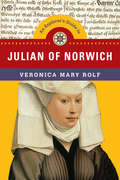
Explorer's Guide to Julian of Norwich (An Explorer's Guide)
by Veronica Mary RolfJulian of Norwich's Revelations of Divine Love is truly an astounding work: an inspiring example of Christian mysticism, a unique contribution to Christian theology, the first book in English known to have been written by a woman. Veronica Mary Rolf guides us as we read, examining its fourteenth-century context and illuminating our understanding of this enduring work.
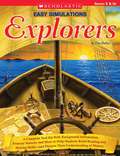
Explorers: A Complete Tool Kit With Background Information, Primary Sources, And More That Help Students Build Reading And Writing Skills-and Deepen Their Understanding Of History
by Tim BaileyIn this weeklong simulation, students discover what it's like to embark on a voyage across the Atlantic Ocean as an explorer during the tim of Christopher Columbus. Students learn about problem solving, seafaring, and navigation. Includes step-by-step directions, plus reproducible student worksheets, charts, maps, and rubrics. Using simulations is one of the most powerful methods of teaching history. Guaranteed to motivate and engage all students!
Exploring Animal Encounters: Philosophical, Cultural, And Historical Perspectives (Palgrave Studies in Animals and Literature)
by Matthew Calarco Dominik OhremThis collection of essays offers multifaceted explorations of animal encounters in a range of philosophical, cultural, literary, and historical contexts. Exploring Animal Encounters encourages us to think about the richness and complexity of animal lives and human-animal relations, foregrounding the intricate roles nonhuman creatures play in the always already more-than-human sphere of ethics and politics. In this way, the essays in this volume can be understood as a contribution to alternative imaginings of interspecies coexistence in a time in which the issue of human relations with earth and earth others has come to the fore with unprecedented force and severity.
Exploring Anne Frank and Difficult Life Stories (Literary Criticism and Cultural Theory)
by Kirsten Kumpf Baele Waltraud Maierhofer Doyle StevickThis volume, grounded in the Diary of a Young Girl and its continued appeal to readers of all ages, sees both promise in the relevance of Anne Frank’s story in the twenty‑first century, and potential for new ways of teaching her story and those of other genocides and human right violations. Engaging Anne Frank with these other cases clarifies the distinct nature of the Holocaust, and we build on the fact that the diary touches areas of deep interest, especially to young people, and that it has been read as a monument to resisting hate, which is itself a prerequisite for educating citizens of more diverse and inclusive societies. The diverse contributions and viewpoints in this volume illustrate how rich the ongoing engagement with Anne Frank and her legacy remain.
Exploring Bilingualism in Education: A Machine-Generated Literature Overview
by Udaya MuthyalaThis book presents a comprehensive introduction to the field of bilingualism and multilingualism with focus on education. It compiles various sub-themes such as minority and majority languages, childhood bilingualism, and the historical aspects of bilingualism. Each chapter is carefully structured and includes clear themes with introductory notes by the editor. The main focus is on the cognitive development of bilinguals and how they promote cultural diversity, presenting how bilingual education and second language teaching within the socio-political and multicultural landscape are interconnected. It discusses significant concepts such as translanguaging, an innovative approach that transcends traditional language boundaries, and the role of Multilingual Education (MLE) in shaping the future of learning. Research also focusses on macro-level issues, such as globalization and minority language preservation, and micro-level strategies for bilingual classrooms. In addition, it explores topics such as Dual Language schools, the economic benefits of bilingualism, and debates on language loss and bilingual education policy in different countries. These well-organized topics promote a holistic understanding of bilingualism and encourage a positive view of linguistic diversity and its role in creating a more inclusive, multicultural world. For educators, researchers and language enthusiasts, it is an invaluable resource that provides a thorough understanding of the nuances of bi/multilingual education. The auto-summaries have been generated by a recursive clustering algorithm via the Dimensions Auto-summarizer by Digital Science handled by Subject Matter Experts and the editor of this book. The editor of this book selected which Springer Nature content should be auto-summarized and decided its order of appearance. Please be aware that these are extractive auto-summaries, which consist of original sentences, but are not representative of its original paper, since we do not show the full length of the publication. Please note that only published SN content is represented here, and that machine-generated books are still at an experimental stage.
Exploring Business Language and Culture (Second Language Learning and Teaching)
by Paweł Zakrajewski Urszula Michalik Iwona Sznicer Anna StworaThis book aims to present the results of research in the sphere of business language and culture, as well as the experience of pedagogical staff and practitioners concerned with broadly understood business. The highly complex nature of contemporary business environment, approached from both the theoretical and practical standpoint, does not cease to prove that research into business studies cannot be dissociated from the cultural and linguistic context. The chapters included in this book were contributed by academics and practitioners alike, which offers a balanced approach to the topic and ensures high levels of diversity together with an undeniable homogeneity. They were gathered with a view to show various aspects of business language, perceived both as a medium of communication and as a subject of research and teaching. They are concerned with business culture as well, including business ethics and representations of business in popular culture. Owing to its multidisciplinary approach, the book presents a roadmap towards successful functioning in business settings, highlighting such issues as education for business purposes, the study of language used in business contexts, the aspects of cross-cultural communication, as well as ethical behaviour based upon different values in multicultural business environments. Given its multifarious character, the book surely appeals not only to academics, but also to the interested laymen and students who wish to expand their knowledge of business studies and related phenomena.
Exploring Children's Literature
by Nikki Gamble Sally YatesThis book is based on the belief that deep subject knowledge of language and literature provides a foundation for effective teaching and learning. It provides a comprehensive guide to the range of genres and characteristic features of English language fiction written for children. It will help readers to: o develop their understanding of literature within social, cultural and political reading practices o extend their knowledge of language features and conventions of different genres o develop skills in analytical and critical reading. The scope of the first edition has been expanded from solely fiction to cover a range of contemporary literature, including poetry, plays and picture books. The case study material, investigative activities and practical exercises promote an active approach to learning. The second edition focuses on a range of fiction relevant to the National Curriculum for England and the National Literacy Strategy. It provides examples from a range of world literature written in English. Examples from work in translation are also included. It also addresses the requirements of the primary curriculum for ITT English. This book is essential reading for student teachers on PGCE, and undergraduate teacher education courses, and for teachers undertaking CPD in English, literacy or children's literature. It provides useful support material for language coordinators, SCITT coordinators and literacy consultants.
Exploring Children's Literature: Reading for Knowledge, Understanding and Pleasure
by Nikki GambleHaving a good working knowledge of children's literature is vital for primary teachers; the best way to develop switched-on young readers is to ensure they get access to high-quality age-appropriate material that engages and inspires them. This book explores the rich and varied world of children's literature and how it can be used in teaching to promote reading for pleasure and create lifelong readers. This new edition has been completely updated to include: - 5 brand new chapters covering Knowledge & skills, Classics, Illustrated fiction & graphic novels, Non-fiction, and Humour - New expert voice features providing commentaries from educators, literary experts and authors such as Lucy Worsley - Up to date book lists featuring recent and more diverse literature and authors - New practical activities and case studies show casing children's books and how to use them in the classroom - Further reading links to take students further
Exploring Children's Literature: Reading for Knowledge, Understanding and Pleasure
by Nikki GambleHaving a good working knowledge of children's literature is vital for primary teachers; the best way to develop switched-on young readers is to ensure they get access to high-quality age-appropriate material that engages and inspires them. This book explores the rich and varied world of children's literature and how it can be used in teaching to promote reading for pleasure and create lifelong readers. This new edition has been completely updated to include: - 5 brand new chapters covering Knowledge & skills, Classics, Illustrated fiction & graphic novels, Non-fiction, and Humour - New expert voice features providing commentaries from educators, literary experts and authors such as Lucy Worsley - Up to date book lists featuring recent and more diverse literature and authors - New practical activities and case studies show casing children's books and how to use them in the classroom - Further reading links to take students further
Exploring Children's Literature: Reading with Pleasure and Purpose
by Ms Nikki GambleThis book introduces the role of children's literature in promoting reading for pleasure and creating lifelong readers. Focusing on a range of fiction relevant to the National Curriculum, it covers genres such as poetry, non-fiction, traditional stories and picture books. Concepts and terminology are explained through a wide range of examples. This revised edition includes -Investigative activities and practical exercises for personal or classroom use -Examples from world literature and work in translation highlighting the range of diverse material available for teaching inspiration -Coverage of social, cultural and political reading practices to increase understanding of factors that influence children's reading experience -Coverage of disability and equality issues to help inform teaching strategies that overcome barriers to learning. This book is essential for students on PGCE, BEd and BA Education courses, and for teachers undertaking CPD in English, literacy or children's literature. It provides useful support material for language coordinators and literacy consultants, and can be used to support distance-learning, as an aid to self-study, or as a course text.
Exploring Classroom Discourse: Language in Action (Routledge Introductions to Applied Linguistics)
by Steve WalshRoutledge Introductions to Applied Linguistics consists of introductory level textbooks covering the core topics in Applied Linguistics, designed for those entering postgraduate studies and language professionals returning to academic study. The books take an innovative "practice to theory" approach, with a ‘back to front’ structure which takes the reader from real life problems and issues in the field, then enters into a discussion of intervention and how to engage with these concerns. The final section concludes by tying the practical issues to theoretical foundations. Additional features include tasks with commentaries, a glossary of key terms, and an annotated further reading section. This book looks particularly at the relationship between language, interaction and learning. Providing a comprehensive account of current perspectives on classroom discourse, the book aims to promote a fuller understanding of interaction, regarded as being central to effective teaching and introduces the concept of classroom interactional competence (CIC). The case is made in this book for a need not only to describe classroom discourse, but to ensure that teachers and learners develop the kind of interactional competence which will result in more engaged, dynamic classrooms where learners are actively involved in the learning process. This approach makes an invaluable resource for language teachers, as well as students of language and education, and language acquisition within the field of applied linguistics.
Exploring Communication Law: A Socratic Approach
by Randy BobbittBased on the Socratic dialogue method, Talking about Communication Law provides the fundamentals for discussing controversial issues in communication law and asks thought-provoking questions to promote debate. Providing the basic framework of the law with discussions focusing on the major cases in each area, Talking about Communication Law begins with the material related to the First Amendment's free speech and free press clauses, then proceeds through the various topics derived from those freedoms, including libel, privacy, access to information, the media and the courts, broadcast regulation, intellectual property, and business communication. Conciseness and clear language are its strengths, as are its readability and engaging approach. Point-counterpoint essays, frequently asked questions, chapter glossaries, and case problems encourage students to take an active approach to learning and create a running dialogue with the reader. The first one-third of the book deals with the First Amendment as applied to political speech, campus issues, and sexual expression. The second one-third deals with issues in journalism, broadcasting, and cyberspace.The last one-third deals with issues related to communication in business, such as advertising, public relations, and intellectual property.
Exploring Communication Law: A Socratic Approach
by Randy BobbittExploring Communication Law, Second Edition, provides an overview of the law as it pertains to print, broadcast, and online journalism, as well as non-journalistic forms of expression. It begins by introducing students to the First Amendment in a general sense, then explores how the principles of free speech are applied in various circumstances, such as political speech, sexual expression, and K-12 and college campuses. The text also explains the fundamentals of media law in areas such as defamation, privacy, the media and the courts, confidentiality and privilege, access to information, broadcasting, and cyberspace.
Exploring Communication Theory: Making Sense of Us
by Kory Floyd Angela Trethewey Larry Erbert Paul SchrodtThis text presents and explains theories from the epistemological perspectives of the researchers who use them. Rather than representing a specific theoretical paradigm (social scientific, interpretive, or critical), the author team presents the three major paradigms in one text, each writing in his or her area of expertise. Every theory is explained in a "native" voice, from a position of deep understanding and experience, improving clarity for readers. The text also provides insights on using communication theory to address real-life challenges. Considering that theories are developed to guide scholarly research more than to provide practical advice, this feature of the book helps students create realistic expectations for what theories can and cannot do and makes clear that many theories can have practical applications that students can use to their advantage in everyday life. Offering a comprehensive exploration of communication theories through multiple lenses, Exploring Communication Theory provides an integrated approach to studying communication theory and to demonstrating its application in the world of its readers.
Exploring Communication Theory: Making Sense of Us
by Kory Floyd Paul Schrodt Kristina M. Scharp Larry A. ErbertContinuing its engaging and readable approach, this second edition presents an overview of the major theories within the discipline of communication studies inclusive of the three major paradigms of social scientific, interpretive, and critical. Each member of the author team writes from his or her area of expertise, giving readers further insight into how the theory is applied to research within communication studies. With extensive pedagogical features, the text underscores key concepts and links them to students’ own communication studies scholarship and everyday lives. Key updates for this edition include updated examples and discussions around theories to give students a deeper understanding; explorations of Black Lives Matter and intersectionality; and new pedagogical features in line with Bloom’s taxonomy. This book is ideal as a core text for undergraduate courses in communication theory. Online resources also accompany the text: an instructor manual, test bank, lecture slides, and author introduction videos. Please visit www.routledge.com/9781032015194 to access the materials.
Exploring Composition Studies
by Paul Kei Matsuda Kelly RitterKelly Ritter and Paul Kei Matsuda have created an essential introduction to the field of composition studies for graduate students and instructors new to the study of writing. The book offers a careful exploration of this diverse field, focusing specifically on scholarship of writing and composing. Within this territory, the authors draw the boundaries broadly, to include allied sites of research such as professional and technical writing, writing across the curriculum programs, writing centers, and writing program administration. Importantly, they represent composition as a dynamic, eclectic field, influenced by factors both within the academy and without. The editors and their sixteen seasoned contributors have created a comprehensive and thoughtful exploration of composition studies as it stands in the early twenty-first century. Given the rapid growth of this field and the evolution of it research and pedagogical agendas over even the last ten years, this multi-vocal introduction is long overdue.
Exploring Composition Studies: Sites, Issues, Perspectives
by Kelly Ritter and Paul Kei MatsudaKelly Ritter and Paul Kei Matsuda have created an essential introduction to the field of composition studies for graduate students and instructors new to the study of writing. The book offers a careful exploration of this diverse field, focusing specifically on scholarship of writing and composing. Within this territory, the authors draw the boundaries broadly, to include allied sites of research such as professional and technical writing, writing across the curriculum programs, writing centers, and writing program administration. Importantly, they represent composition as a dynamic, eclectic field, influenced by factors both within the academy and without. The editors and their sixteen seasoned contributors have created a comprehensive and thoughtful exploration of composition studies as it stands in the early twenty-first century. Given the rapid growth of this field and the evolution of it research and pedagogical agendas over even the last ten years, this multi-vocal introduction is long overdue.
Exploring Contextualism and Performativity: The Environment Matters (Perspectives in Pragmatics, Philosophy & Psychology #30)
by Alessandro Capone Assunta PennaThis edited volume on contextualism and pragmatics is interdisciplinary in character and contains contributions from linguistics, cognitive science and socio-pragmatics. Going beyond conventional contextual matters of truth-conditions and pragmatic intrusion, this text deals with a variety of issues including hyperbole, synonymy, reference, argumentation, schizophrenia, rationality, morality, silence and clinical pragmatics. Contributions also address the semantics/pragmatics debate and show to what extent the theory of contextualism can be applied. This volume is based on a unitary research project financed by the University of Messina and appeals to students and researchers working in linguistics and the philosophy of language.
Exploring Corpus Linguistics: Language in Action (Routledge Introductions to Applied Linguistics)
by Winnie ChengRoutledge Introductions to Applied Linguistics consists of introductory level textbooks covering the core topics in Applied Linguistics, designed for those entering postgraduate studies and language professionals returning to academic study. The books take an innovative "practice to theory" approach, with a ‘back to front’ structure which takes the reader from real life problems and issues in the field, then enters into a discussion of intervention and how to engage with these concerns. The final section concludes by tying the practical issues to theoretical foundations. Additional features include tasks with commentaries, a glossary of key terms, and an annotated further reading section. Corpus linguistics is a key area of applied linguistics and one of the most rapidly developing. Winnie Cheng’s practical approach guides readers in acquiring the relevant knowledge and theories to enable the analysis, explanation and interpretation of language using corpus methods. Throughout the book practical classroom examples, concordance based analyses and tasks such as designing and conducting mini-projects are used to connect and explain the conceptual and practical aspects of corpus linguistics. Exploring Corpus Linguistics is an essential textbook for post-graduate/graduate students new to the field and for advanced undergraduates studying English Language and Applied Linguistics.
Exploring Creativity Through Writing: A Handbook for Teachers
by Alan Maley Sharoon SunnyThe book explores the nature of human creativity and its importance in education with reference to past and ongoing work on creativity theory. It aims to direct the attention of teachers to the need for creativity in education by dispelling the mystique surrounding it, and the feelings of inadequacy or apprehension it may evoke in educators, particularly in the Asia region.The book offers an introduction to creativity in writing: the rationale for including it in language programmes, the benefits it can bestow and the results it can produce – as well as dealing with common objections to it. It divides creative writing into two major sections – poetry and stories, followed by a copious set of varied classroom activities. For each activity, a standard format is adopted to offer teachers maximum support in implementing the procedures, including supplementary comments on each activity. It is distinct for its accessibility and clarity, its abundance of practical and ready-touse classroom activities and its unique combination of theoretical underpinnings and practical implementation.This book will be useful to students, pre-service teachers and researchers who are new to the teaching of English Language, both in the Asian context and in the wider world. It will also be an essential companion to practicing in-service teachers and Teacher Trainers to further sharpen their concepts and skills.
Exploring Critical Digital Literacy Practices: Everyday Video in a Dual Language Context (Expanding Literacies in Education)
by Jessica Zacher PandyaIn this book, Jessica Zacher Pandya examines the everyday videomaking practices of students in a dual language, under-resourced school in order to explore the ways children interrogate their worlds, the kinds of identities they craft, and the language and literacy learning practices that emerge from digital video production. Focusing on vulnerable populations who are often left out of innovative in- and out-of-school digital media projects—including English language learners, immigrants, and children with special needs—this book offers an expanded understanding of children’s critical digital literacy practices, and shows how videomaking in the regular curriculum affords opportunities for redistributive social justice. Weaving together pedagogical, methodological, social, and political concerns into her examination of a real-world context, Pandya offers a practical and informative analysis of making videos in schools; examines the impact of videomaking on students’ language use and agency; and adds significantly to current theorizations of digital and new literacies.
Exploring Dark Comedy in Ecological Literature: Echoes of Laughter in the Capitalocene
by Nagendra Kumar Tanu Gupta Mohammad RahmatullahIn this textbook, &‘dark comedy&’ is re-imagined as an ecological instrument: a volatile compound of irony, grotesquerie, and mischievous insight that exposes the carbonised scaffolding of late-capitalist life. Rather than sneering at catastrophe, the chapters anatomise the mechanics—defamiliarising punch line, carnival inversion, affective whiplash—by which humour slips past guard-dogs and rouses an anaesthetised public. The horizon against which this inquiry unfolds is the Capitalocene: a name that indicts capitalism, not &“Man,&” as the principal geological agent of ruin. Moving from Aristophanes to Atwood, from street theatre to streaming satire, each text shows laughter doing intellectual lifting. In one moment it fractures complacent common sense; in the next it stitches together circuits of feeling in which eco-grief can transmute into civic resolve. Juxtaposed with the authority of tragic form, dark comedy proves the more permeable solvent: it dissolves cultural defences, lets paradox breathe, and leaves readers wondering how ecosystems became punch-lines. Methodologically the book is multidisciplinary. Literary tangles with environmental philosophy; humour theory quarrels with eco-Marxism; cultural studies supplies the ethnographic grit that keeps abstraction honest. By braiding those strands the argument departs from standard ecocritical curricula, insisting that jokes are not side-shows but catalytic sites where ethics, affect, and political economy collide. Designed for advanced undergraduates yet hospitable to researchers, the volume refuses the consolations of easy optimism even as it gestures toward actionable hope. Its wager is simple: teach readers to hear the subversive crackle inside dark laughter and they may also learn to re-script the damaged world that provokes it.
Exploring Digital Communication: Language in Action
by Caroline TaggRoutledge Introductions to Applied Linguistics is a series of introductory level textbooks covering the core topics in Applied Linguistics, primarily designed for those beginning postgraduate studies or taking an introductory MA course, as well as advanced undergraduates. Titles in the series are also ideal for language professionals returning to academic study. The books take an innovative ‘practice to theory’ approach, with a ‘back-to-front’ structure. This leads the reader from real-world problems and issues, through a discussion of intervention and how to engage with these concerns, before finally relating these practical issues to theoretical foundations. Exploring Digital Communication aims to discuss real-world issues pertaining to digital communication, and to explore how linguistic research addresses these challenges. The text is divided into three sections (Problems and practices; Interventions; and Theory), each of which is further divided into two subsections which reflect linguistic issues relating to digital communication. The author seeks to demystify any perceived divide between online and offline communication, arguing that issues raised in relation to digital communication throw light on language use and practices in general, and thus linguistic interventions in this area have implications not only for users of digital communication but for linguists’ general understanding of language and society. Including relevant research examples, tasks and a glossary, this textbook is an invaluable resource for postgraduate and upper undergraduate students taking New Media or Communication Studies modules within Applied Linguistics and English Language courses.
Exploring Digital Humanities in India: Pedagogies, Practices, and Institutional Possibilities
by Nidhi Kalra Maya DoddThis book explores the emergence of digital humanities in the Indian context. It looks at how online and digital resources have transformed classroom and research practices. It examines some fundamental questions: What is digital humanities? Who is a digital humanist? What is its place in the Indian context? The chapters in the volume: • study the varied practices and pedagogies involved in incorporating the ‘digital’ into traditional classrooms; • showcase how researchers across disciplinary lines are expanding their scope of research, by adding a ‘digital’ component to update their curriculum to contemporary times; • highlight how this has also created opportunities for researchers to push the boundaries of their pedagogy and encouraged students to create ‘live projects’ with the aid of digital platforms; and • track changes in the language of research, documentation, archiving and reproduction as new conversations are opening up across Indian languages. A major intervention in the social sciences and humanities, this book will be of great interest to scholars and researchers of media studies, especially new and digital media, education, South Asian studies and cultural studies.
Exploring Discourse in Context and in Action
by Jonathan Crichton Christopher N. Candlin Stephen H. MooreThis book combines an authoritative examination of the field of discourse-based research with practical guidance on research design and development. The book is not prescriptive but instead invites expansive, innovative thinking about what discourse is, why it matters to people at particular sites and how it can be investigated. The authors identify a set of questions that, they argue, are crucial for understanding discourse. Part I of the book explores the implications of these questions, providing a comprehensive survey of relevant scholars, theories, concepts and methodologies. Part II addresses these implications, setting out a multi-perspectival approach to resourcing and integrating micro and macro perspectives in the description, interpretation and explanation of data. Part III offers wide-ranging resources to support further reflection and future research. Ultimately, this book offers a new research approach for students, researchers and practitioners in Applied Linguistics to encourage and support research that can be truly impactful through its relevance to social and professional practice.