- Table View
- List View
Money-Driven Medicine: The Real Reason Health Care Costs So Much
by Maggie MaharWhy is medical care in the United States so expensive? For decades, Americans have taken it as a matter of faith that we spend more because we have the best health care system in the world. But as costs levitate, that argument becomes more difficult to make. Today, we spend twice as much as Japan on health care—yet few would argue that our health care system is twice as good.Instead, startling new evidence suggests that one out of every three of our health care dollars is squandered on unnecessary or redundant tests; unproven, sometimes unwanted procedures; and overpriced drugs and devices that, too often, are no better than the less expensive products they have replaced.How did this happen? In Money-Driven Medicine, Maggie Mahar takes the reader behind the scenes of a $2 trillion industry to witness how billions of dollars are wasted in a Hobbesian marketplace that pits the industry's players against each other. In remarkably candid interviews, doctors, hospital administrators, patients, health care economists, corporate executives, and Wall Street analysts describe a war of "all against all" that can turn physicians, hospitals, insurers, drugmakers, and device makers into blood rivals. Rather than collaborating, doctors and hospitals compete. Rather than sharing knowledge, drugmakers and device makers divide value. Rather than thinking about long-term collective goals, the imperatives of an impatient marketplace force health care providers to focus on short-term fiscal imperatives. And so investments in untested bleeding-edge medical technologies crowd out investments in information technology that might, in the long run, not only reduce errors but contain costs.In theory, free market competition should tame health care inflation. In fact, Mahar demonstrates, when it comes to medicine, the traditional laws of supply and demand do not apply. Normally, when supply expands, prices fall. But in the health care industry, as the number and variety of drugs, devices, and treatments multiplies, demand rises to absorb the excess, and prices climb. Meanwhile, the perverse incentives of a fee-for-service system reward health care providers for doing more, not less.In this superbly written book, Mahar shows why doctors must take responsibility for the future of our health care industry. Today, she observes, "physicians have been stripped of their standing as professionals: Insurers address them as vendors ('Dear Health Care Provider'), drugmakers and device makers see them as customers (someone you might take to lunch or a strip club), while . . . consumers (aka patients) are encouraged to see their doctors as overpaid retailers. . . . Before patients can reclaim their rightful place as the center—and indeed as the raison d'être—of our health care system," Mahar suggests, "we must once again empower doctors . . . to practice patient-centered medicine—based not on corporate imperatives, doctors' druthers, or even patients' demands," but on the best scientific research available.
Moneyland: The Inside Story of the Crooks and Kleptocrats Who Rule the World
by Oliver BulloughInc.com 5 Business Thrillers to Read on the Beach This Summer * Amazon Best Book of the Month - Nonfiction * An Economist Book of the Year * The Sunday Times Business Book of the Year"If you want to know why international crooks and their eminently respectable financial advisors walk tall and only the little people pay taxes, this is the ideal book for you. Every politician and moneyman on the planet should read it, but they won't because it's actually about them." —John le Carré, author of A Legacy of Spies An investigative journalist's deep dive into the corrupt workings of the world's kleptocrats.From ruined towns on the edge of Siberia, to Bond-villain lairs in London and Manhattan, something has gone wrong. Kleptocracies, governments run by corrupt leaders that prosper at the expense of their people, are on the rise. Once upon a time, if an official stole money, there wasn't much he could do with it. He could buy himself a new car or build himself a nice house or give it to his friends and family, but that was about it. If he kept stealing, the money would just pile up in his house until he had no rooms left to put it in, or it was eaten by mice. And then some bankers had a bright idea. Join the investigative journalist Oliver Bullough on a journey into Moneyland—the secret country of the lawless, stateless superrich. Learn how the institutions of Europe and the United States have become money-laundering operations, attacking the foundations of many of the world's most stable countries. Meet the kleptocrats. Meet their awful children. And find out how heroic activists around the world are fighting back. This is the story of wealth and power in the 21st century. It isn't too late to change it.
Monitoring Border Violence in the EU: Frontex in Focus (Routledge Studies in Liberty and Security)
by Elspeth GuildThis book examines EU external border violence and the role of Frontex, and how it can be made legally and politically accountable for these incidents. The volume sets out what the international standards are for monitoring border violence and how monitors’ independence must be guaranteed and where these standards come from. The book provides realistic options to resolve the crisis by focusing on how effective and independent border monitoring can ensure better human rights compliance at EU external borders. At the centre of the book is the question: how can we achieve effective monitoring of border police, including Frontex, by competent and independent state authorities which have as a mission human rights implementation? The goal of the book is to examine how states can prevent and investigate allegations of such violence and diminish the apparent impunity of those border police who engage in it. This book will be of interest to students of EU policy, law, migration and refugee studies and International Relations.
Monitoring Detention, Custody, Torture and Ill-treatment: A Practical Approach to Prevention and Documentation
by Jason Payne-James Jonathan Beynon Duarte VieiraThis landmark practical guide assists all those involved in monitoring detention conditions and investigating and preventing torture. The prestigious global author team identify the medical, legal and professional frameworks and international instruments applicable to those detained, and highlight how torture or other cruel and inhuman degrading treatments or punishments are identified, investigated and should be prevented. · A comprehensive and wide range of detention settings and circumstances are covered including police stations, prisons, mental health, and social care civil conditions to prisoner of war, detention camps, military, and armed conflict. · Advice, monitoring, and assessment is given for special groups, including the custody of women, children, vulnerable adults, and individuals on hunger strike · Practical guidelines are given for the assessment of ill-treatment of individuals in custody including sexual abuse · Online links to the latest legal, ethical, and medical guidelines for key countries help to make this book appropriate for all. Challenging, thought-provoking yet thoroughly practical, this book is essential reading for anyone involved in the monitoring of detention conditions and the treatment and investigation of individuals in any form of custody. The content is aimed primarily at healthcare professionals but it also highly relevant for anyone who may form part of a visiting team, including lay individuals, lawyers and law enforcement professionals, as well as for academics.
Monitoring International Labor Standards: Summary of Domestic Forums
by Roger G. McelrathSince 1943, Recommended Dietary Allowances (RDAs) has been recognized as the most authoritative source of information on nutrient levels for healthy people. Since publication of the 10th edition in 1989, there has been rising awareness of the impact of nutrition on chronic disease. In light of new research findings and a growing public focus on nutrition and health, the expert panel responsible for formulating RDAs reviewed and revised its approach -- the result: Dietary Reference Intakes. This new series of references greatly extends the scope and application of previous nutrient guidelines. The first volume includes calcium, magnesium, phosphorus, vitamin D, and fluoride. For each nutrient the committee presents what is known about how the nutrient functions in the human body, which factors (caffeine or exercise, for example) may affect how it works, and how the nutrient may be related to chronic disease. Based on analysis of nutrient metabolism in humans and data on intakes in the U. S. population, the committee recommends intakes for each age -- from the first days of life through childhood, sexual maturity, midlife, and the later years. Recommendations for pregnancy and lactation also are made, and the book identifies when intake of a nutrient may be too much. Dietary Reference Intakes provides three sets of measures for each nutrient in the volume: -- Estimated Average Requirements (EARs), estimated for age and gender categories. -- Recommend
Monitoring Laws: Profiling and Identity in the World State
by Jake GoldenfeinOur world, and the objects and people within it, are increasingly interpreted and classified by automated systems. At the same time, those automated systems and their classifications influence what happens in the physical world. In this cyber-physical world or 'world state', people are asking what law's role should be in regulating these systems. In Monitoring Laws, Jake Goldenfein traces the history of government profiling, from the invention of photography to create criminal registers, through the emerging deployments of computer vision for personality, emotion, and behavioral analysis. He asks what elements and applications of profiling have provoked legal intervention in the past, and demonstrates exactly what is different about contemporary profiling that requires a new legal treatments. This work should be read by anyone interested in how computation is changing society and governance, and what the law can do to better protect us from these changes now.
Monitoring State Compliance with the UN Convention on the Rights of the Child: An Analysis of Attributes (Children’s Well-Being: Indicators and Research #25)
by Ziba Vaghri Jean Zermatten Gerison Lansdown Roberta RuggieroThis open access book presents a discussion on human rights-based attributes for each article pertinent to the substantive rights of children, as defined in the United Nations Convention on the Rights of the Child (UNCRC). It provides the reader with a unique and clear overview of the scope and core content of the articles, together with an analysis of the latest jurisprudence of the UN Committee on the Rights of the Child. For each article of the UNCRC, the authors explore the nature and scope of corresponding State obligations, and identify the main features that need to be taken into consideration when assessing a State’s progressive implementation of the UNCRC. This analysis considers which aspects of a given right are most important to track, in order to monitor States' implementation of any given right, and whether there is any resultant change in the lives of children. This approach transforms the narrative of legal international standards concerning a given right into a set of characteristics that ensure no aspect of said right is overlooked. The book develops a clear and comprehensive understanding of the UNCRC that can be used as an introduction to the rights and principles it contains, and to identify directions for future policy and strategy development in compliance with the UNCRC. As such, it offers an invaluable reference guide for researchers and students in the field of childhood and children’s rights studies, as well as a wide range of professionals and organisations concerned with the subject.
Monopolies and Patents: A Study of the History and Future of the Patent Monopoly
by Harold G. FoxHarold G. Fox is a native of Toronto and a graduate of the University of Toronto and the Law School of Osgoode Hall. For some years he practised patent and trade mark law as a member of the firm of Fetherstonhaugh & Fox. In the nineteen-twenties he was invited to take over the management of the Canadian zipper industry and, since that time, has devoted his main energies to the development of that business. But, while he is identified today as a competent industrial executive, he is also recognized as an authority in his special field of patent, trade mark, and copyright law, in which he has continued to take a deep interest. He believes that a lawyer makes a good businessman. He has, therefore, pursued not only the academic aspect of his profession but has kept an intimate contact with it both as counsel and as writer. He is the author of several standard text-books on Canadian law—Canadian Patent Law and Practice (1937), The Canadian Law of Trade Marks and Industrial Design (1940), and The Canadian Law of Copyright (1944). He is the editor of Fox's Patent, Trade Mark and Copyright Cases, now in its sixth volume, and is a considerable contributor to legal periodicals in this country and in the United States. He was appointed King's Counsel in 1937 and is a Fellow and some-time President of the Patent Institute of Canada. He holds the honorary appointment in the University of Toronto Lecturer in the Law of Industrial Property and, in 1945, in recognition of his contributions to Canadian legal scholarship, the University conferred on him the honorary degree of Doctor of Letters. Dr. Fox has decided views on the benefits which are conferred on the industrial and commercial life of a country, and, indeed, on the public generally, by a strong patent system efficiently administered. In his view, the modern patent of invention is not a monopoly, in the sense in which that word is generally understood. He feels that the modern witch-hunt against monopolies is misdirected when it levels its attack on the patent system and predicates the opinion that, if the history of monopolies were better understood, much of the antagonism against them would tend to disappear. It is an exponent of this view that he examines, in this work, the reasons for the institution and development of monopolies, the factors which contributed to their growth in England in the sixteenth and seventeenth century, and the cause of their gradual decline and transition into the modern patent of invention. The approach to the subject is not, however, merely antiquarian. In his opinion the patent system can be improved in the interests not only of the inventor but also of the public. With this thought in mind he proposes an amendment to the patent system designed to eliminate the indefinable element of inventive ingenuity from the content of patentability, a reform which would remove much of the uncertainty of result which in the past has been the main fault of the patent system and the chief curse of the inventor and patentee. In this work Dr. Fox demonstrates an attitude toward monopolies and patents which reflects both his legal training and research and his practical industrial experience. Whether one agrees with his interpretation of the history of monopolies and his proposal for amendment of the patent system or not, this book will evoke much interest and possible controversy.
Monopsony in Law and Economics
by Roger D. Blair Jeffrey L. HarrisonMost readers are familiar with the concept of a monopoly. A monopolist is the only seller of a good or service for which there are not good substitutes. Economists and policy makers are concerned about monopolies because they lead to higher prices and lower output. The topic of this book is monopsony, the economic condition in which there is one buyer of a good or service. It is a common misunderstanding that if monopolists raise prices, then monopsonists must lower them. It is true that a monopsonist may force sellers to sell to them at lower prices, but this does not mean consumers are better off as a result. This book explains why monopsonists can be harmful and the way law has developed to respond to these harms.

Monsanto and Intellectual Property in South America
by Felipe Amin FilomenoIntellectual property is one of the most valuable forms of property in the modern world. From the perspective of companies producing knowledge-intensive goods, it encourages technological innovations for the benefit of humanity. For consumers of technology, it can be seen as a restriction on access to knowledge that inflates corporate rents. When genetic material crucial for human life is isolated from the commons, engineered and turned into private intellectual property, dissent is likely to emerge. Felipe Filomeno uses the case of Monsanto in South American soybean agriculture to theorize about the emergence and change of intellectual property regimes. Based on official documents, interviews, journalistic material, and academic literature, the study shows not only the relations of competition, coercion, and alliances that lie behind the post-1980 global upward ratchet of intellectual property protection but also the strategies that have the potential to reverse it.
Monsters: A Fan’s Dilemma
by Claire DedererA passionate, provocative and blisteringly smart interrogation of how we experience art in the age of #MeToo, and whether we can separate an artist's work from their biography.What do we do with the art of monstrous men? Can we love the work of Roman Polanski and Michael Jackson, Hemingway and Picasso? Should we love it? Does genius deserve special dispensation? Is history an excuse? What makes women artists monstrous? And what should we do with beauty, and with our unruly feelings about it?Claire Dederer explores these questions and our relationships with the artists whose behaviour disrupts our ability to apprehend the work on its own terms. She interrogates her own responses and her own behaviour, and she pushes the fan, and the listener, to do the same. Morally wise, deeply considered and sharply written, Monsters gets to the heart of one of our most pressing conversations.(P) 2023 Penguin Audio
Monsters: A Fan’s Dilemma
by Claire Dederer'An exhilarating, shape-shifting exploration of the perilous boundaries between art and life' JENNY OFFILL'An incredible book, the best work of criticism I have read in a very long time' NICK HORNBY'Wise and bold and full of the kind of gravitas that might even rub off' LISA TADDEOA passionate, provocative and blisteringly smart interrogation of how we experience art in the age of #MeToo, and whether we can separate an artist's work from their biography.What do we do with the art of monstrous men? Can we love the work of Roman Polanski and Michael Jackson, Hemingway and Picasso? Should we love it? Does genius deserve special dispensation? What makes women artists monstrous? And what should we do with beauty, and with our unruly feelings about it?Claire Dederer explores these questions and our relationships with the artists whose behaviour disrupts our ability to understand the work on its own terms. She interrogates her own responses and behaviour, and she pushes the fan, and the reader, to do the same. Morally wise, deeply considered and sharply written, Monsters gets to the heart of one of our most pressing conversations.'A blisteringly erudite and entertaining read . . . It's a book that deserves to be widely read and will provoke many conversations' NATHAN FILER'Fascinating . . . Dederer poses so many topical questions, plays with so many pertinent ideas, that I'm still thinking about this book long after I finished it' CLAIRE FULLER
Monstrous Crimes and the Failure of Forensic Psychiatry
by John Douard Pamela D. SchultzThe metaphor of the monster or predator--usually a sexual predator, drug dealer in areas frequented by children, or psychopathic murderer--is a powerful framing device in public discourse about how the criminal justice system should respond to serious violent crimes. The cultural history of the monster reveals significant features of the metaphor that raise questions about the extent to which justice can be achieved in both the punishment of what are regarded as "monstrous crimes" and the treatment of those who commit such crimes. This book is the first to address the connections between the history of the monster metaphor, the 19th century idea of the criminal as monster, and the 20th century conception of the psychopath: the new monster. The book addresses, in particular, the ways in which the metaphor is used to scapegoat certain categories of crimes and criminals for anxieties about our own potential for deviant, and, indeed, dangerous interests. These interests have long been found to be associated with the fascination people have for monsters in most cultures, including the West. The book outlines an alternative public health approach to sex offending, and crime in general, that can incorporate what we know about illness prevention while protecting the rights, and humanity, of offenders. The book concludes with an analysis of the role of forensic psychiatrists and psychologists in representing criminal defendants as psychopaths, or persons with certain personality disorders. As psychiatry and psychology have transformed bad behavior into mad behavior, these institutions have taken on the legal role of helping to sort out the most dangerous among us for preventive "treatment" rather than carceral "punishment."
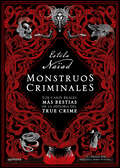
Monstruos criminales: Los casos reales más bestias de la historia del true crime
by Estela Naïad¿Qué ocurre cuándo la superstición y la fantasía se cruzan con la crueldad? Descubre los casos más espeluznantes de la historia del true crime. Creer que los monstruos existen solo en el folklore nos da cierta tranquilidad. Sin embargo, la historia está llena de criaturas más crueles que los de las propias leyendas. Hombres y mujeres de carne y hueso que, creyéndose brujas, vampiros u hombres lobo, perpetraron crímenes que estremecieron a la humanidad.Entre las filas de asesinos más despiadados del mundo, se encuentran monstruos tan reales como la vampira Elizabeth Bathory, que cometió actos atroces contra cientos de jóvenes; Romasanta, el hombre lobo gallego, que se enriqueció vendiendo la grasa de sus víctimas; o Mary Bateman, la bruja de Yorkshire, que cometió asesinatos valiéndose de sus supuestos poderes mágicos. Deja que este libro te atrape, pero ten cuidado... porque cuando miras al abismo, este te devuelve la mirada.

Montana Driver Manual
by Montana Department of Justice Motor Vehicle DivisionAs Montanans, we don’t think twice about jumping in our vehicles and driving 300 or 400 miles to visit family, watch our kids play sports, or find a stream where the fish are rising. Whatever the reason for our travels, the Montana Driver Manual provides a wealth of information to help us stay safe on our roads and highways.

Montesquieu: The Spirit of the Laws
by Anne M. Cohler Basia Carolyn Miller Harold Samuel Stone Charles De MontesquieuThe Spirit of the Laws is without question one of the central texts in the history of eighteenth-century thought, yet there has been no complete scholarly English language edition since 1750. This lucid translation renders Montesquieu's problematic text newly accessible to a fresh generation of students, helping them to understand why Montesquieu was such an important figure in the early enlightenment and why The Spirit of the Laws was such an influence on those who framed the American Constitution. Fully annotated, this edition focuses on Montesquieu's use of sources and his text as a whole, rather than on those opening passages toward which critical energies have traditionally been devoted.
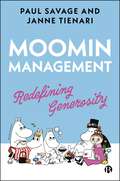
Moomin Management: Redefining Generosity
by Janne Tienari Paul SavageMoomins, beloved troll creatures of Moominvalley, have captivated hearts worldwide since the 1940s. This book unveils the Moomin business management journey, from Tove Jansson's creations to a global art-based brand and a growing ecosystem of companies. Emphasising generosity as a key management principle, it champions caring for people as vital for a thriving organisation. Generosity, rooted in love, courage and belief in equality, shapes the Moomin ethos, underpinning not just the brand, but also strategic partnerships, engagement with technologies and the virtual world. Offering rare insights from the Moomin inner circle, this management guide advocates sustainable practices. It unveils the keys to a business devoted to comforting people and fostering good, inspiring a blueprint for lasting success.
Moore's Ethics (Elements in Ethics)
by William H. ShawThis Element critically surveys the full range of G. E. Moore's ethical thought, including: (1) his rejection of naturalism in favor of the view that 'good' designates a simple, indefinable property, which cannot be identified with or reduced to any other property; (2) his understanding of intrinsic value, his doctrine of organic wholes, his repudiation of hedonism, and his substantive account of the most important goods and evils; and (3) his critique of egoism and subjectivism and his elaboration of a non-hedonistic variant of utilitarianism that, among other things, creatively blends aspects of act- and rule-oriented versions of that theory.
Mooting: The Definitive Guide
by Eric BaskindMooting offers an excellent opportunity to develop your skills in an enjoyable, interactive and challenging way. Participation in mooting can lead to improved academic performance, enhancing your knowledge and your ability to handle complex legal materials as well as improving the power of your persuasive argument and vital skills, which will enhance your profile for prospective employers. In this book, Eric Baskind provides a seamless and comprehensive examination of the various areas involved in mooting and advocacy, combining both theoretical and practical aspects as well as the organisation of and participation in mooting competitions. Online video footage of an actual moot brings the practical nature of mooting alive and will give you expert advice and analysis of successful mooting technique as well as tips for improvement. Each moot video is highlighted at various points of interest to provide expert commentary and analysis of the mooters’ presentation, identifying the mooters’ strengths and weaknesses and how successfully they use cases and other materials to support their argument. These sections will then be re-enacted, incorporating the suggestions for improvements to help you to see how the overall performance could have been improved. This definitive guide will equip you with a complete grasp of mooting from the initial preparatory stages through to advocacy in the moot itself.
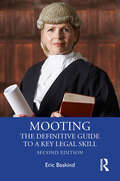
Mooting: The Definitive Guide to a Key Legal Skill
by Eric BaskindMooting offers a comprehensive examination of mooting and advocacy, combining both theoretical and practical aspects. This definitive guide will equip you with a complete grasp of mooting from the initial preparatory stages through to advocacy in the moot itself.The second edition has been comprehensively revised and updated, reflecting changes brought about by the evolving digital landscape, as well as addressing how mooting can benefit SQE (Solicitors Qualifying Examination) students. Changes and updates include new ‘thinking points’ throughout the book, end-of-chapter questions to reinforce learning and understanding, a new section on how to read the book, additional material for students participating in International moots, new material on electronic bundles, and an expanded section on lawyers’ skills including more on building confidence and countering nerves.Online video footage of an actual moot brings the practical nature of mooting alive and will give you expert advice and analysis of successful mooting technique as well as tips for improvement. Mooting is essential reading for Law students at all levels.
Moral AI: And How We Get There (Pelican Books)
by Walter Sinnott-Armstrong Jana Schaich Borg Vincent ConitzerA balanced and thought-provoking guide to all the big questions about AI and ethics Can computers understand morality? Can they respect privacy? And what can we do to make AI safe and fair? The artificial intelligence revolution has begun. Today, there are self-driving cars on our streets, autonomous weapons in our armies, robot surgeons in our hospitals – and AI's presence in our lives will only increase. Some see this as the dawn of a new era in innovation and ease; others are alarmed by its destructive potential. But one thing is clear: this is a technology like no other, one that raises profound questions about the very definitions of human intelligence and morality. In Moral AI, world-renowned researchers in moral psychology, philosophy, and artificial intelligence – Jana Schaich Borg, Walter Sinnott-Armstrong and Vincent Conitzer – tackle these thorny issues head-on. Writing lucidly and calmly, they lay out the recent advances in this still nascent field, peeling away the exaggeration and misleading arguments. Instead, they offer clear examinations of the moral concerns at the heart of AI programs, from racial equity to personal privacy, fake news to autonomous weaponry. Ultimately, they argue that artificial intelligence can be built and used safely and ethically, but that its potential cannot be achieved without careful reflection on the values we wish to imbue it with. This is an essential primer for any thinking person.
Moral Accountability and International Criminal Law: Holding Agents of Atrocity Accountable to the World
by Kirsten FisherThis book examines international criminal law from a normative perspective and lays out how responsible agents, individuals and the collectives they comprise, ought to be held accountable to the world for the commission of atrocity. The author provides criteria for determining the kinds of actions that should be addressed through international criminal law. Additionally, it asks, and answers, how individual responsibility can be determined in the context of collectively perpetrated political crimes and whether an international criminal justice system can claim universality in a culturally plural world. The book also examines the function of international criminal law and finally considers how the goals and purposes of international law can best be institutionally supported. This book is of particular interest to a multidisciplinary academic audience in political science, philosophy, and law, however the book is written in clear jargon-free prose that is intended to render the arguments accessible to the non-specialist reader interested in global justice, human rights and international criminal law.
Moral Acquaintances and Moral Decisions
by Stephen S. HansonThe potential of modern medicine in a pluralistic world leads to the potential for moral conflict. The most prevalent bioethical theories often either overestimate or underestimate the amount of shared moral belief that can be used to address those conflicts. This work presents a means for taking seriously the pluralism in the modern world while recognizing the likelihood of moral "acquaintance" between persons with differing views. It criticizes moral theories that overstate the extent of the problem of pluralism as well as those that imply too much agreement between reasonable moral persons, yet it locates a means for the resolution of many moral conflicts in moral acquaintanceship. Drawing from the work of H. Tristram Engelhardt, Jr., casuists and principle-based theorists, and Erich Loewy and Kevin W. Wildes's initial development of the concept of moral acquaintanceship, Moral Acquaintances and Moral Decisions is philosophically indepth work with direct applications for decisionmaking in real medical settings. A work in moral theory as well as a source of real world guidance, clinically oriented bioethics professionals as well as students of bioethical theory should find the theory of moral acquaintanceship provided here important to their work.
Moral Agency in Eastern and Western Thought: Perspectives on Crafting Character (Routledge Studies in Ethics and Moral Theory)
by Jonathan Jacobs and Heinz-Dieter MeyerThis volume explores how individuals use moral agency to craft the moral dispositions and moral capabilities needed for living well-lived lives. It draws on Eastern and Western philosophical and ethical traditions to formulate and address key issues concerning character development and moral agency.In both Eastern and Western traditions, the complexities of shaping an individual’s moral agency focus on sustained processes of inner self-cultivation. The chapters in this volume highlight the ways in which one is to manage and direct one’s desires and aspirations, and what is to count as the source of guidance for a well-lived life. They engage with key figures and traditions in the history of Eastern and Western philosophy, including Confucian, Buddhist, and Western sources, from Aristotle to Kant. The juxtaposition of sources from the different parts of the world highlights striking similarities and significant contrasts and provides rich conceptual resources for further exploration of these issues. The volume provides a broader, deeper pursuit of central issues of moral psychology and ethics in ways that highlight the inexhaustible resources in these traditions. The focus on character is a way to draw together perspectives on ethical life, theories of human agency, views of fundamental, life-guiding values, and relations between individuals and society and how persons see their place in the world.Moral Agency in Eastern and Western Thought will appeal to scholars and advanced students working on virtue ethics, moral psychology, comparative philosophy, and history of philosophy.
Moral Aims: Essays on the Importance of Getting It Right and Practicing Morality with Others
by Cheshire CalhounWe rely on two different conceptions of morality. On the one hand, we think of morality as a correct action guide. Morality is accessed by taking up a critical, reflective point of view where our concern is with identifying the moral rules that would be the focus of the requiring activities of persons in a hypothetical social world whose participants were capable of accessing the justifications for everyone's endorsing just this set of rules. On the other hand, in doing virtually anything connected with morality--making demands, offering excuses, justifying choices, expressing moral attitudes, getting uptake on our resentments, and the like-we rely on social practices of morality and shared moral understandings that make our moral activities and attitudes intelligible to others. This second conception of morality, unlike the first, is not shaped by the aim of getting it right or the contrast between correct and merely supposed moral requirements. It is shaped by the moral aim of practicing morality with others within an actual, not merely hypothetical, scheme of social cooperation. If practices based on misguided moral norms seem not to be genuine morality under the first conception, merely hypothetical practices seem not to be the genuine article under the second conception. The premise of this book, which collects together nine previously published essay and a new introduction, is that both conceptions are indispensable. But exactly how is the moral theorist to go about working simultaneously with two such different conceptions of morality? The book's project is not to construct an overarching methodology for handling the two conceptions of morality. Instead, it is to provide case studies of that work being done.