- Table View
- List View
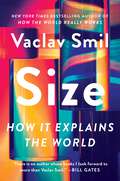
Size: How It Explains the World
by Vaclav SmilFrom the New York Times bestselling author of How the World Really Works, a wide-ranging look at the most fundamental governing principle of our world: size, whose laws, limits, and peculiarities offer the key to understanding health, wealth, and even happiness“No one writes about the great issues of our time with more rigor or erudition than Vaclav Smil.” — Elizabeth KolbertTo answer the most important questions of our age, we must understand size. Neither bacteria nor empires are immune to its laws. Measuring it is challenging, especially where complex systems like economies are concerned, yet mastering it offers rich rewards: the rise of the West, for example, was a direct result of ever more accurate and standardized measurements.Using the interdisciplinary approach that has won him a wide readership, Smil draws upon history, earth science, psychology, art, and more to offer fresh insight into some of our biggest challenges, including income inequality, the spread of infectious disease, and the uneven impacts of climate change. Size explains the regularities—and peculiarities—of the key processes shaping life (from microbes to whales), the Earth (from asteroids to volcanic eruptions), technical advances (from architecture to transportation), and societies and economies (from cities to wages). This book about the big and the small, and the relationship between them, answers the big and small questions of human existence:What makes a human society too big? What about a human being?Which alternative energy sources have the best chance of scaling and reducing our dependence on fossil fuels?Why do tall people make more money?What makes a face beautiful? How about a cathedral?How can changing the size of your plates help you lose weight?The latest masterwork of “an ambitious and astonishing polymath who swings for fences” (Wired) Size is a mind-bending journey that turns the modern world on its head.

Sizing and Selecting Air Pollution Control Systems
by Howard D. Hesketh Frank L. Cross Jr.This book is designed to acquaint the reader with current regulations and with the necessary information to size air pollution control systems. The material presented should also help enable one to select the appropriate equipment for retrofit or new process control, to prepare specifications to purchase equipment, and to prepare permits for air pollution control systems. Sizing and Selecting Air Pollution Control Systems provides guidance to help those responsible for air pollution control to specify systems which are cost-effective and energy-efficient to meet the needs of their employers and the government. When equipment specifications are properly prepared, they provide for an easier comparison of competitive bids of those devices capable of meeting standards reliably and economically.
Skeletal Atlas of Child Abuse
by Jennifer C. Love Jason M. Wiersema Sharon M. DerrickThis illustrated guide to the role of the forensic anthropologist in investigating child abuse is an essential resource in one of the most contentious areas of forensic pathology. Not only does it supply a review of the literature in this field, but it illustrates the material with photographs from real cases investigated by the Harris County Institute of Forensic Sciences, which serves a population of four million people. Broken down into body regions and skeletal elements for ease of reference, the atlas facilitates the vital work performed by forensic anthropologists, who bring to the autopsy table a store of specialist knowledge that can turn a case. Despite the frequency of child fatalities (in America, 2.3per 100,000) attributed to physical abuse, merely recognizing the offense is a major forensic challenge. The tell-tale signatures of non-accidental injury can be very subtle, making it difficult to differentiate between accidental and non-accidental injury. Yet successful adjudication of a child abuse case often rests on the correct interpretation of skeletal injury. In this volume the authors guide the reader through published data regarding the mechanics and interpretation of injuries,including the agencies they indicate. The material includes discussion of the limitations faced in interpreting some injuries, where making a judgment on cause is tricky. In addition, a chapter on natural diseases affecting the bones provides a good overview of several conditions that are often invoked as 'mimics' of child abuse. Finally, this publication evinces the value of collaboration between the pathologist and the anthropologist.
Skeletal Development and Repair
by Matthew J. HiltonSkeletal Development and Repair: Methods and Protocols is a compilation of a variety of skeletal research protocols utilizing the laboratory mouse as the platform for surgical manipulation and/or transplantation as well as the source of tissues and cells for in vitro culture and analyses. Chapters are written by experts in the field and cover topics including surgical, transplantation and organ culture methods that permit analyses of skeletal tissues undergoing repair in vivo and permits analyses of cellular interactions ex vivo, histological and molecular techniques developed to study gene and protein expression in whole embryos, skeletal tissues and tissue sections and in vitro primary cell culture protocols designed to assay gene function in specific cell populations. Written in the successful Methods in Molecular Biology series format chapters include introductions to their respective topics, lists of the necessary materials and reagents, step-by-step, readily reproducible protocols and notes on troubleshooting and avoiding known pitfalls. Authoritative and easily accessible, Skeletal Development and Repair: Methods and Protocols is a comprehensive laboratory manual for all levels of basic research scientists working in the broad fields of skeletal development and skeletal repair research.
Skeletal Development and Repair: Methods and Protocols (Methods in Molecular Biology #2230)
by Matthew J. HiltonThis second edition provides a comprehensive laboratory manual on skeletal development and skeletal repair research utilizing mouse models. Chapters provide methods and protocols on the most current and cutting-edge techniques in skeletal development and repair, histological, cellular, and molecular techniques. Written in the highly successful Methods in Molecular Biology series format, chapters include introductions to their respective topics, lists of the necessary materials and reagents, step-by-step, readily reproducible laboratory protocols, and tips on troubleshooting and avoiding known pitfalls. Authoritative and cutting-edge, Skeletal Development and Repair: Methods and Protocols-Second Edition aims to ensure successful results in the further study of this vital field.
Skeletal Muscle Physiology: An Update to Anatomy and Function
by Christopher MyersThis book provides a comprehensive overview of skeletal muscle structure, function, and regulation at the cellular and molecular levels. In addition, the book covers various topics, such as muscle contraction, energy metabolism, fatigue, adaptation, and plasticity. This book discusses skeletal muscle anatomy and histology and then covers muscle contraction's molecular and cellular mechanisms. Also, it includes an in-depth discussion of the sarcomere, the basic unit of muscle contraction, and the role of calcium in the process of muscle contraction.This book also explores the energy metabolism of skeletal muscle, including the role of ATP, glycogen, and fatty acids in providing energy for muscle contraction. Additionally, the book covers the mechanisms of fatigue, including peripheral and central factors contributing to muscle fatigue.Other topics covered include muscle adaptation to exercise, the molecular and cellular mechanisms of muscle hypertrophy and atrophy, andthe influence of age, sex, and disease on skeletal muscle function.Overall, Skeletal Muscle Physiology: An Update to Anatomy and Function thoroughly explores the structure and function of skeletal muscle, making it an essential resource for students and professionals in exercise science, sports medicine, and physiology.The auto-summaries have been generated by a recursive clustering algorithm via the Dimensions Auto-summarizer by Digital Science handled by Subject Matter Experts and the external editor. The editor of this book selected which SN content should be auto-summarized and decided its order of appearance. Please be aware that the auto-summaries consist of original sentences, but are not representative of its original paper, since we do not show the full length of the publication. Please note that only published SN content is represented here, and that machine-generated books are still at an experimental stage.
Skeletal Muscle Regeneration in the Mouse
by Michael KybaThis volume focuseson the cell biology and physiology of skeletal muscle regeneration. This Bookis a collection of classic and cutting edge protocols optimized for mice, butin most cases adaptable to rat or other mammalian models, that will allow aninvestigator to develop and implement a research study on skeletal muscleregeneration. Chapters address the three major areas of study: provoking regeneration by inducing damage to muscle, analyzing theprogenitor cells of skeletal muscle, and quantifying overall muscle function. Subjects discussed include: inducing skeletal muscle injury byeccentric contraction; volumetric muscle loss; single myofiber isolation andculture; satellite cell transplantation; muscle clearing for whole mountimmunostaining; luciferase tracking of muscle stem cells; mitochondrialand mitophagy flux analysis; in vivo assessment of muscle contractility;force measurements on single isolated myofibers; and analysis of aerobicrespiration in intact skeletal muscle tissue by microplate respirometry. Written in the highlysuccessful Methods in Molecular Biology series format,chapters include introductions to each respective topic, lists of the necessarymaterials and reagents, step-by-step, readily reproducible laboratoryprotocols, and tips on troubleshooting and avoiding known pitfalls. Cutting edge andpractical, Skeletal Muscle Regeneration in the Mouse: Methods and Protocols is an essential laboratory reference for research inskeletal muscle growth, damage, repair, degeneration, and regenerative therapyin the mouse model system.
Skeletal Muscle Stem Cells: Methods and Protocols (Methods in Molecular Biology #2640)
by Atsushi AsakuraThis volume looks at the latest technologies and methods--combined with new genetic tools available in animal models--used in this constantly evolving field. The chapters in this book are organized into three sections: Section one covers muscle stem cells and progenitor cells; Section Two discusses animal models for muscle stem cells and regeneration; and Section Three explores bioinformatics and imaging analysis for muscle stem cells. Written in the highly successful Methods in Molecular Biology series format, chapters include introductions to their respective topics, lists of the necessary materials and reagents, step-by-step, readily reproducible laboratory protocols, and tips on troubleshooting and avoiding known pitfalls.Cutting-edge and comprehensive, Skeletal Muscle Stem Cells and Regeneration: Methods and Protocols is a valuable tool for all researchers looking to expand their knowledge on skeletal muscle growth, repair, degeneration, aging, and regenerative medicine.
Skeletal Tissue Mechanics
by Joseph Wallace Matthew R. AllenThis textbook describes the biomechanics of bone, cartilage, tendons and ligaments. It is rigorous in its approach to the mechanical properties of the skeleton yet it does not neglect the biological properties of skeletal tissue. Time is taken to introduce basic mechanical and biological concepts, and the approaches used for some of the engineering analyses are purposefully limited. The book is an effective bridge between engineering, veterinary, biological and medical disciplines and will be welcomed by students and researchers in biomechanics, orthopedics, physical anthropology, biological science, medical science, and veterinary science. This third edition includes a new chapter on the history of skeletal tissue structure and function, updated content across chapters and recent suggested readings.
Skeletal Trauma Analysis: Case Studies in Context
by Nicholas V. Passalacqua Christopher W. RainwaterIn the post-Daubert era, forensic science disciplines are increasingly informed by robust, statistically-sound experimental research. The educational value of the well-documented case study, however, remains as important as ever. Emphasizing known contextual information, this volume serves as a case-driven guide to skeletal trauma analysis through the unique perspective of each chapter’s authors. Both forensic anthropologists and pathologists contribute skeletal trauma cases covering a range of topics including child abuse, blunt force trauma, descents from height, plane crashes, sharp force trauma and dismemberment, gunshot wounds, blast trauma, and burned body interpretation. Several chapters also include a discussion of potentially confounding taphonomic influences such as animal scavenging, water immersion, burning, and extended postmortem intervals. Detailed descriptions with multiple supporting images allow the practitioner’s skeletal trauma interpretation to be compared to the “answer” as it pertains to the known circumstances surrounding the traumatic events of each case.
Skeletal Trauma: Identification of Injuries Resulting from Human Rights Abuse and Armed Conflict
by Erin H. Kimmerle Jose Pablo BaraybarWritten to assist in large-scale investigations of human rights violations, this seminal work describes the mechanisms of injuries, synthesizes variations in wounding patterns, and constructs an epidemiological framework for collecting, analyzing, and interpreting physical evidence for use at trial. It presents protocols for systemic data collection and methods for differential wound diagnosis. Contributions evaluate blasting injuries, blunt force trauma, skeletal evidence of torture, sharp force trauma, and gunfire injuries. Illustrated with more than 600 photographs, each chapter discusses wounding mechanisms, wound pathophysiology, relevant legal examples, and contributed case studies.
Skeletal Variation and Adaptation in Europeans: Upper Paleolithic To The Twentieth Century
by Christopher B. RuffA comprehensive analysis of changes in body form and skeletal robusticity from the Terminal Pleistocene through the Holocene, leading to the modern European human phenotype. Skeletal Variation and Adaptation in Europeans: Upper Paleolithic to the Twentieth Century brings together for the first time the results of an unprecedented large-scale investigation of European skeletal remains. The study was conducted over ten years by an international research team, and includes more than 2,000 skeletons spanning most of the European continent over the past 30,000 years, from the Early Upper Paleolithic to the 20th century. This time span includes environmental transitions from foraging to food production, small-scale to large-scale urban settlements, increasing social stratification and mechanization of labor, and climatic changes. Alterations in body form and behavior in response to these transitions are reconstructed through osteometric and biomechanical analyses. Divided into four sections, the book includes an introduction to the project and comprehensive descriptions of the methods used; general continent-wide syntheses of major trends in body size, shape, and skeletal robusticity; detailed regional analyses; and a summary of results. It also offers a full data set on an external website. Brings together data from an unprecedented large-scale study of human skeletal and anatomical variations Includes appendix of specific information from each research site Synthesizes data from spatial, temporal, regional, and geographical perspectives Skeletal Variation and Adaptation in Europeans will be a valuable resource for bioarchaeologists, palaeoanthropologists, forensic anthropologists, medical historians, and archaeologists at both the graduate and post-graduate level.
Skeleton Keys: The Secret Life of Bone
by Brian Switek“A provocative and entertaining magical mineral tour through the life and afterlife of bone.” —Wall Street Journal Our bones have many stories to tell, if you know how to listen. Bone is a marvel, an adaptable and resilient building material developed over 500 million years of evolutionary history. It gives our bodies their shapes and the ability to move. It grows and changes with us, an undeniable document of who we are and how we lived. Arguably, no other part of the human anatomy has such rich scientific and cultural significance, both brimming with life and a potent symbol of death. Brian Switek is a charming and enthusiastic osteological raconteur. In this natural and cultural history of bone, he explains where our skeletons came from, what they do inside us, and what others can learn about us when these wondrous assemblies of mineral and protein are all we've left behind. Bone is as embedded in our culture as it is in our bodies. Our species has made instruments and jewelry from bone, treated the dead like collectors' items, put our faith in skull bumps as guides to human behavior, and arranged skeletons into macabre tributes to the afterlife. Switek makes a compelling case for getting better acquainted with our skeletons, in all their surprising roles. Bridging the worlds of paleontology, anthropology, medicine, and forensics, Skeleton Keys illuminates the complex life of bones inside our bodies and out.
Skeptic: Viewing the World with a Rational Eye
by Michael ShermerCollected essays from bestselling author Michael Shermer's celebrated columns in Scientific AmericanFor fifteen years, bestselling author Michael Shermer has written a column in Scientific American magazine that synthesizes scientific concepts and theory for a general audience. His trademark combination of deep scientific understanding and entertaining writing style has thrilled his huge and devoted audience for years. Now, in Skeptic, seventy-five of these columns are available together for the first time; a welcome addition for his fans and a stimulating introduction for new readers.
Skepticism’s Pictures: Figuring Descartes’s Natural Philosophy
by Melissa LoIn seventeenth-century northern Europe, as the Aristotelian foundations of scientia were rocked by observation, experiment, confessional strife, and political pressure, natural philosophers came to rely on the printed image to fortify their epistemologies—and none more so than René Descartes. In Skepticism’s Pictures, historian of science Melissa Lo chronicles the visual idioms that made, sustained, revised, and resisted Descartes’s new philosophy.Drawing on moon maps, political cartoons, student notebooks, treatises on practical mathematics, and other sources, Lo argues that Descartes transformed natural philosophy with the introduction of a new graphic language that inspired a wide range of pictorial responses shaped by religious affiliation, political commitment, and cultural convention. She begins by historicizing the graphic vocabularies of Descartes’s Essais and Principia philosophiae and goes on to analyze the religious and civic volatility of Descartes’s thought, which compelled defenders (such as Jacques Rohault and Wolferd Senguerd) to reconfigure his pictures according to their local visual cultures—and stimulated enemies (such as Gabriel Daniel) to unravel Descartes’s visual logic with devastating irony. In the epilogue, Lo explains why nineteenth-century French philosophers divorced Descartes’s thought from his pictures, creating a modern image of reason and a version of philosophy absent visuality.Engaging and accessible, Skepticism’s Pictures presents an exciting new approach to Descartes and the visual reception of seventeenth-century physics. It will appeal to historians of early modern European science, philosophy, art, and culture and to art historians interested in histories that give images their argumentative power.
Sketches of Physics: The Celebration Collection (Lecture Notes in Physics #1000)
by James D. Wells Gary P. Zank Angel Rubio Roberta Citro Maciej Lewenstein Wolfgang P. SchleichThis book is a journey through the wonders of physics, the special thousandth volume of the renowned Lecture Notes in Physics book series. From quantum physics to solar physics, this volume showcases the beauty of physics in various fields. Written by series editors and colleagues, these essays are accessible to non-specialists and graduate-level students alike, making for an intriguing read for anyone interested in learning about physics beyond their own field of study. Explore the historical development of the series with two insightful forewords.List of essays:A New Era of Quantum Materials Mastery and Quantum Simulators In and Out of EquilibriumEvaluation and Utility of Wilsonian NaturalnessThe Geometric Phase: Consequences in Classical and Quantum PhysicsThe Coming Decades of Quantum SimulationInsights into Complex FunctionsExploring the Hottest Atmosphere with the Parker Solar ProbeA Primer on the Riemann Hypothesis
Sketching Theoretical Biology: Toward a Theoretical Biology, Volume 2
by Wilhelmina A. LeighThe purpose of this volume is to bring together a number of elements that would be useful in the construction of a coherent and comprehensive theory of biology. Based on the assumption that living systems represent some kind of "organized complexity," the collection discusses meaningful ways of formulating two basic questions: what is the nature of this complexity; and, what are the principles of its organization?The question always asked about biological theory is whether or not it constitutes useful scientific theory. Because many useful biological theories cannot yet be made explicit in terms of conventional physics, Sketching Theoretical Biology illustrates the types of questions in biology that correspond to the types of issues discussed in theoretical physics.This book, originally published in 1969, centers around a vigorous debate on the role played by metaphysical beliefs in determining scientific attitudes. The discussion covers heredity and evolution, cognitive processes and control processes, general property of hierarchies, and the current status of neo-Darwinism. Contributors include theoretical physicists, philosophers, neuroscientists, theoretical chemists, computer scientists, chemical engineers, geneticists and molecular biologists.
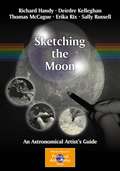
Sketching the Moon: An Astronomical Artist's Guide
by Sally Russell Deirdre Kelleghan Erika Rix Richard Handy Thomas MccagueFor anyone artistically inclined, observing the Moon and attempting to sketch or paint it can easily become a passion. The Moon presents a broad array of tone, texture, and form. Capturing this in a painting or sketch at the eyepiece of a telescope - or even with binoculars - develops observational skills, leaves a record of the observation, and can also be a delightful and rewarding pastime. However, the choice of media available is extensive (acrylic paint, oils, pen, charcoal, etc., and even computer art programs), and there is no existing text that fully explains all lunar sketching and painting techniques in each respective medium. This beautiful and graphically rich book fulfills this requirement. It presents detailed step-by-step instructions, in the form of illustrated tutorials for every major medium employed to represent the Moon. It also provides practical advice on how to sketch outdoors at night (not ideal conditions for an artist!). This is easily the most extensive book on the subject of lunar art for amateur astronomers, particularly those observing through a telescope. The diverse features of the lunar surface will attract and entice readers to review the number of different media presented, exciting and inspiring them with the possibilities of learning to depict all of the fascinating aspects of Earth's very own satellite.
Skill Development and Start-Ups in Entomology
by R. K. GuptaSkill Development and Start-Ups in Entomology provides information on all the possible entrepreneurial avenues that would cater to the needs of educated but unemployed entomologists. It directs the reader towards the diverse sources of income generation in entomology and discusses multidirectional pathways for them based on their individual interests, funds, and assets.The subject matter of this book includes: Entrepreneurship in Productive Insects and Their Products Taxonomist and Museum Curator Web Developers and Tech Preneurs Forensic Entomologist Insect Tourism and Photography as Profession Print edition not for sale in South Asia (India, Sri Lanka, Nepal, Bangladesh, Pakistan or Bhutan)
Skills for a Scientific Life
by John R. HelliwellBeing, or wanting to become, a scientist requires academic training in the science subjects. To succeed as a research scientist and educator requires specific as well as general skills. Skills for a Scientific Life provides insight into how to be successful. This career book is intended for potential entrants, early career and mid-career scientists for a wide range of science disciplines. Features Offers advice on specific skills for research article writing, grant writing, and refereeing as well as teaching undergraduates and supervising postgraduates Provides helpful case studies resulting from the author's teaching and mentoring experience Contributes a special emphasis on skills for realizing wider impacts such as sustainability and gender equality Presents several chapters on leadership skills both in academe and in government service Concludes with an emphasis on the author&’s overall underpinning of the topics from the point of view of ethics
Skills in Biology (Third Edition)
by Tracey Greenwood Biozone International StaffProvides comprehensive guidelines for planning and executing biological investigations in the laboratory and field.
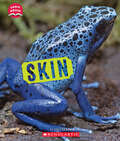
Skin (Learn About)
by Eric GeronLet's learn all about the different types of animal coverings!Frogs, salamanders, and humans are covered in skin. Actually, did you know that every animal with a backbone has some type of skin covering its body? Discover all the incredible ways that skin helps animals survive. With amazing photos and lively text, this book explains how skin helps animals stay dry, keep warm, protect themselves, breathe, and more! Get ready to learn all about skin!ABOUT THE SERIES:Animals have different body coverings for different reasons. Some animals use their coverings to keep warm or stay cool, others use them for protection, and can either stand out or blend in. Some animals even use their coverings to move! This vibrant new set of Learn About books gives readers a close-up look at five different animal coverings, from fur and feathers to skin, scales, and shells. Each book is packed with photographs and fun facts that explore how each covering suits the habitat, diet, survival, and life cycle of various animals in the natural world.
Skin 3-D Models and Cosmetics Toxicity
by Ratan Singh Ray Ashish Dwivedi Atul Kumar Upadhyay Anurag Tripathi Aditya Bhushan Pant Shiv PoojanEfforts are being made by research organizations and cosmetic industries worldwide to develop more precise and targeted 3D models that mimic humans for testing cosmetic and personal health care product ingredients, following a complete ban on animal testing. This book includes several subtopics dedicated to the progress made, challenges faced, roadblocks encountered, and future prospects in the development and validation of 3D models for testing these products. The book consist of an editorial and 14 themed chapters that will showcase the significant progress made so far, challenges encountered, and future prospects in the development of 3D reconstruct models.
Skin Aging & Cancer: Ambient UV-R Exposure
by Ashish Dwivedi Neeraj Agarwal Amit Kumar Tripathi Lipika RayThis book summarizes the potent effect of ultraviolet radiation (UVR) on the photoaging and cancer formation. Skin is the largest human organ which continually reconstructs itself to ensure its viability, integrity, and ability to provide protection for the body. This protection can be compromised by the aging of the skin which ultimately promotes skin inflammation, impaired wound repair, and increased risk of skin cancer. The book entails mechanistic insights into the UVR-induced immunomodulation and DNA damage in the skin to delineate the pathogenesis, and develop novel ways for prevention of photoaging of the skin cells. It also elucidates the potential of nanotechnology in the treatment of skin cancer. Further, it discusses the bioinformatics approaches to understand the molecular mechanism of photoaging and cancer formation.
Skin Biophysics: From Experimental Characterisation to Advanced Modelling (Studies in Mechanobiology, Tissue Engineering and Biomaterials #22)
by Georges LimbertThis book presents state-of-the-art experimental and modelling techniques for skin biophysics that are currently used in academic and industrial research. It also identifies current and future challenges, as well as a growing number of opportunities in this exciting research field. The book covers the basics of skin physiology, biology, microstructural and material properties, and progressively introduces the reader to established experimental characterisation protocols and modelling approaches. Advanced topics in modelling theories and numerical implementation are also presented.The book focusses especially on: 1. Basic physiology, molecular biology, microstructural and material properties of the skin. 2. Experimental characterisation techniques for the skin (including imaging): in vivo and in vitro techniques and combination of those with in silico approaches. 3. State-of-the-art constitutive models of the skin: elastic, anelastic and mechanobiological formulations (e.g. growth, ageing, healing). 4. Applications: mechanics, damage, biological growth, healing, ageing and skin tribology.This book is addressed to postgraduate students in biomedical/mechanical/civil engineering, (bio)physics and applied mathematics, postdoctoral researchers, as well as scientists and engineers working in academia and industry engaged in skin research, particularly, if at the cross-roads of physical experiments, imaging and modelling. The book is also be of interest to clinicians/biologists who wish to learn about the possibilities offered by modern engineering techniques for skin science research and, by so doing, provide them with an incentive to broaden their outlook, engage more widely with the non-clinical research communities and, ultimately, help cross-fertilising new ideas that will lead to better treatment plans and engineering solutions.